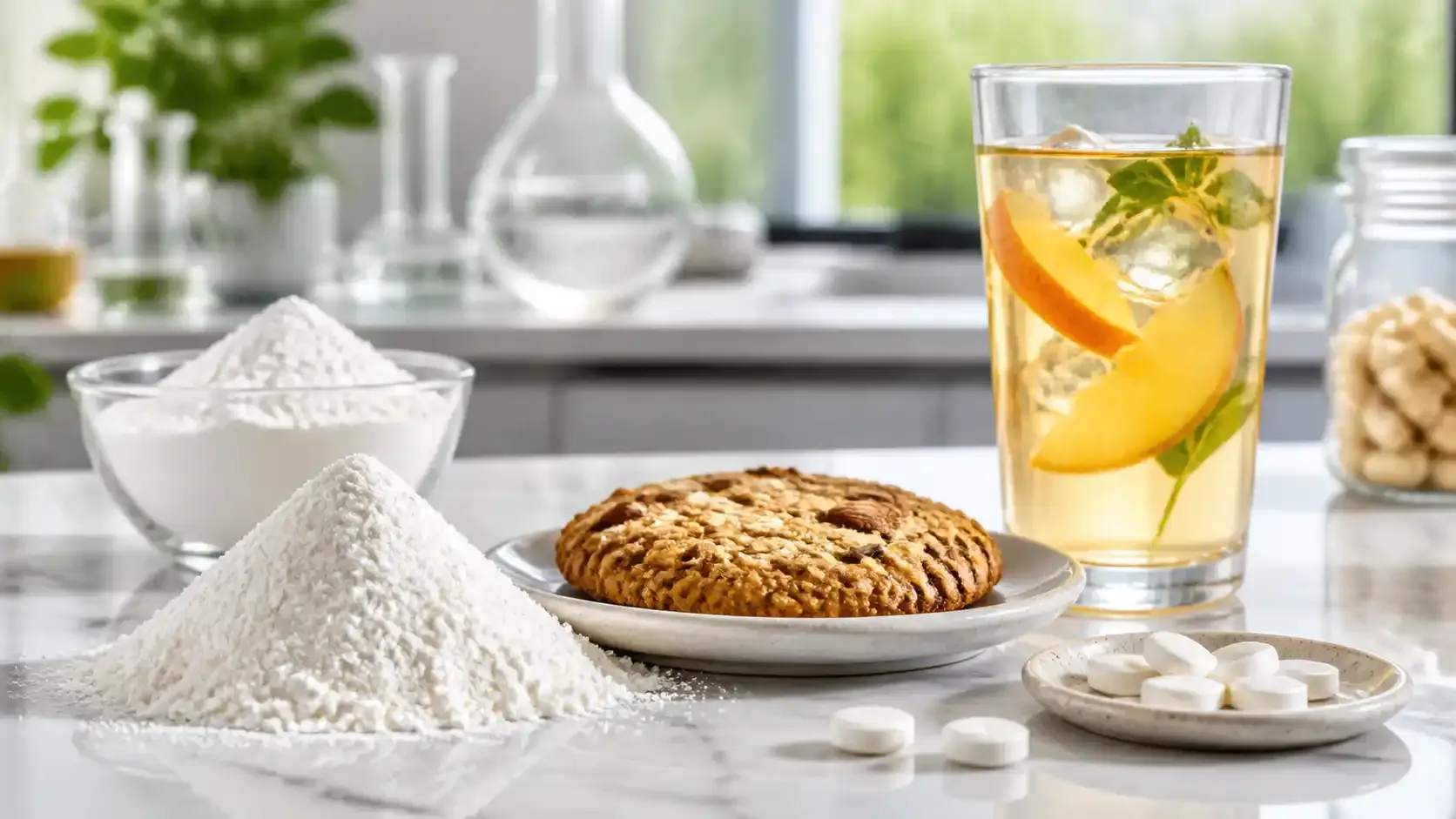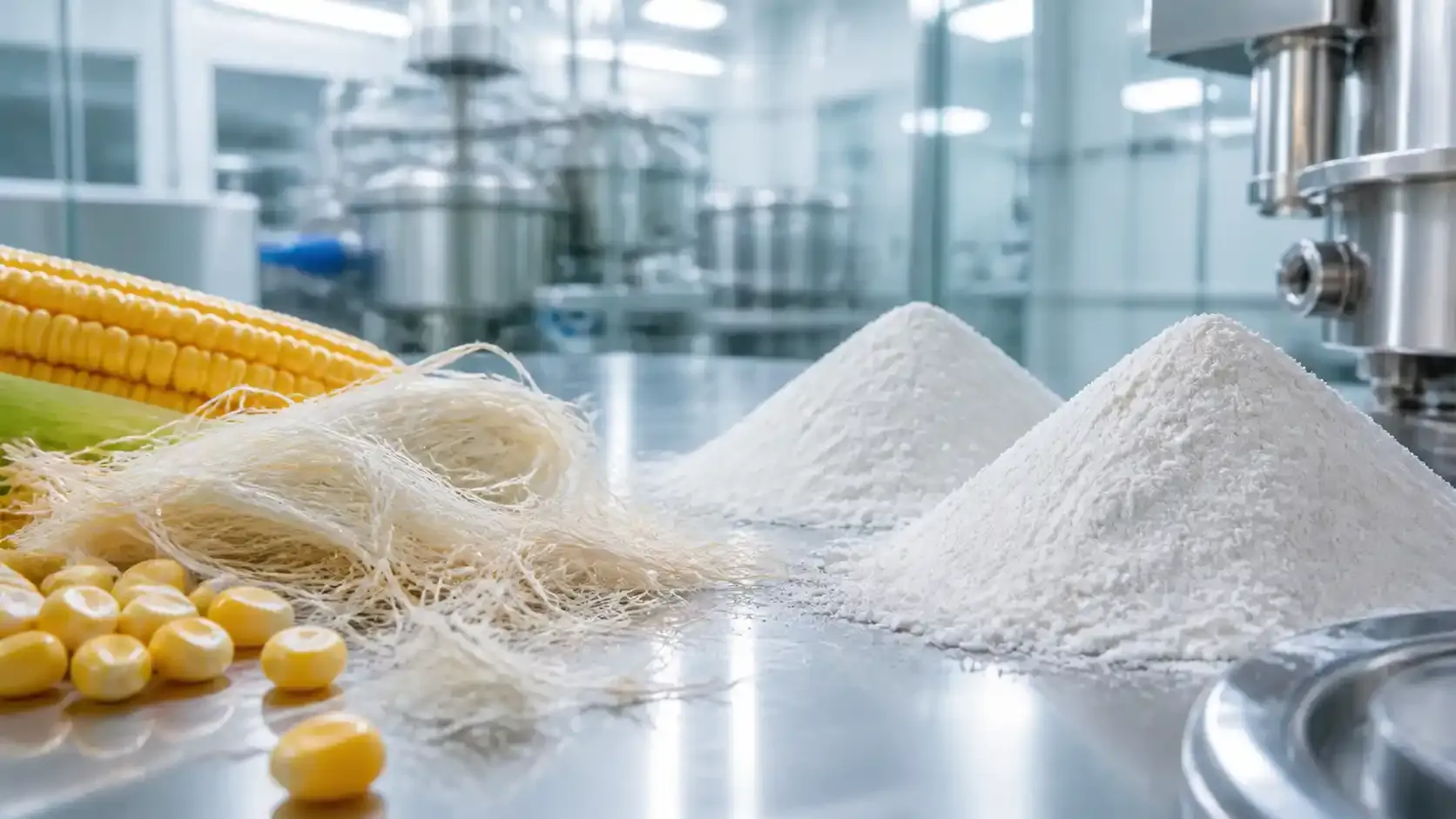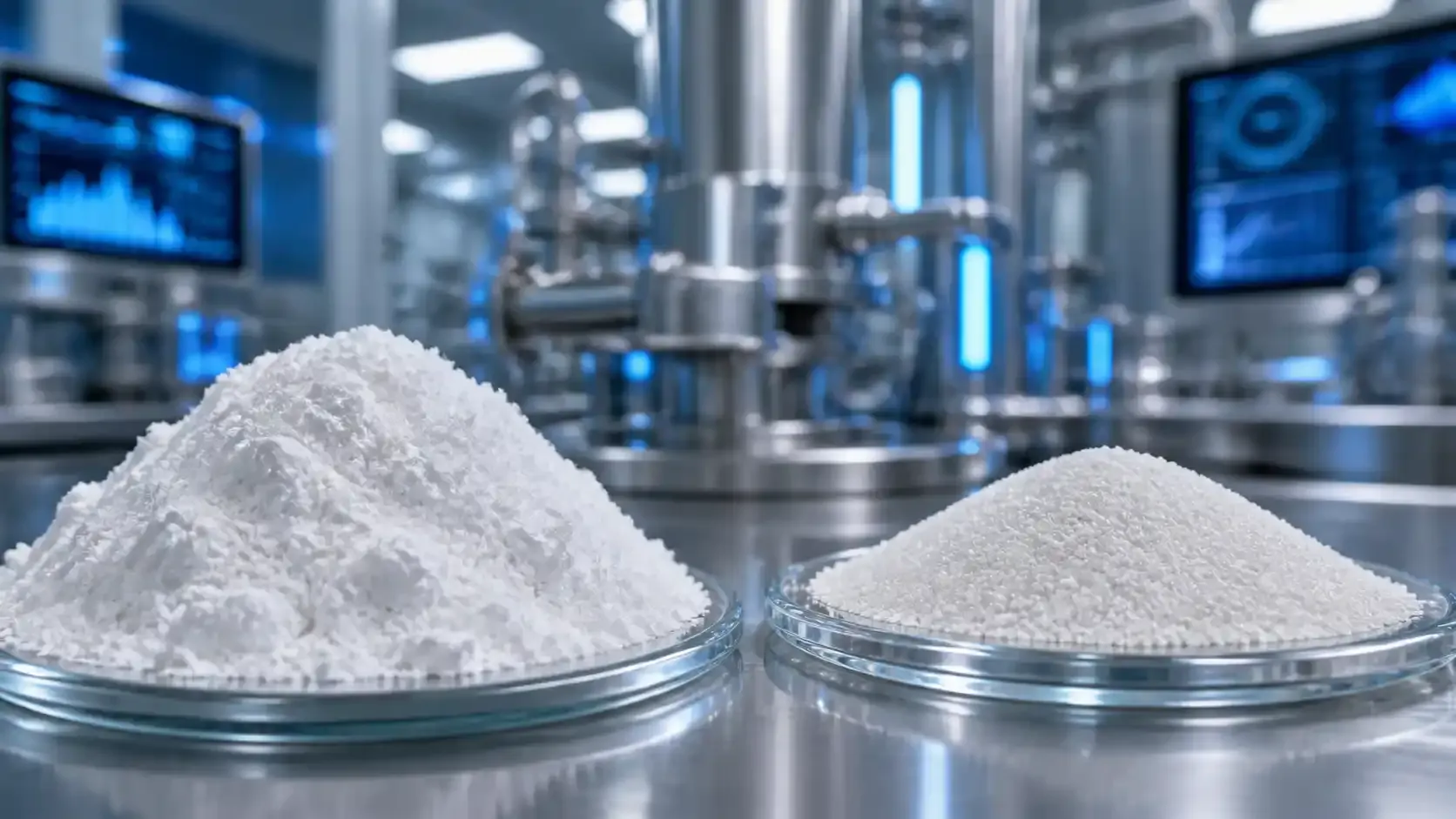
Resistant dextrin and microcrystalline cellulose (MCC) used to be treated as routine line items—one for fiber fortification, one for tablets. That’s no longer how many procurement teams see them. In 2026, both ingredients sit at the intersection of clean-label expectations, formula performance, and audit-ready documentation. As a result, buyers are searching less for “cheap bulk supply” and more for a Recommended Chinese Resistant Dextrin Manufacturer or a Recommended Chinese Microcrystalline Cellulose Supplier that can prove consistent performance batch after batch.
Below is a practical breakdown of what “recommended” should mean in real sourcing work: the process signals to look for in China, the specs worth putting on your RFQ, and the QC evidence that protects your formulation—whether you are sourcing a resistant dextrin supplier for beverages and nutrition powders or a Chinese MCC supplier for tablets and cosmetics.

Why China is becoming a technical hub for these two ingredients
China’s role in resistant dextrin and MCC has shifted from scale-driven production to process-driven consistency. The most credible suppliers increasingly highlight elements that directly affect performance:
- Traceable non-GMO corn starch sourcing (especially relevant for resistant dextrin)
- Enzymatic processing designed for predictable solubility and tolerance
- Automation and closed production workflows that reduce variability
- In-house QC laboratories that support fast release and reliable COA data
For buyers, the key point is simple: lower price may still exist, but the real value comes from fewer reformulations, fewer line trials, and fewer surprises at import inspection.
What makes modern resistant dextrin different in real formulas
Resistant dextrin (often described as soluble corn fiber in product documentation) is typically positioned as a water-soluble dietary fiber that resists digestion in the small intestine and is fermented in the colon. What matters to procurement is how that translates into measurable, repeatable behavior in finished products.
Core performance traits buyers frequently target
A modern resistant dextrin supplier is typically expected to support these practical outcomes:
- Neutral taste and low sensory impact in beverages, powders, bakery, and bars
- Low viscosity for high-fiber systems that still need easy mixing and clean mouthfeel
- Stability under heat and acidic conditions, which reduces risk in pasteurization, hot-fill, and many beverage formats
- Good handling (reduced caking) and predictable flow in production environments
From the supplier-side specifications commonly published by Shine Health, procurement teams will often see benchmarks such as:
- Fiber content: ≥82%
- Protein: ≤6.0%
- Appearance: white to light yellow
- Additional handling indicators such as low water activity and no caking characteristics
These aren’t just marketing lines. They determine whether your “high fiber” claim is feasible without sacrificing stability, taste, or shelf-life expectations.
The process details that actually matter
When evaluating a Recommended Chinese Resistant Dextrin Manufacturer, it helps to tie process claims to functional results. For example:
- Non-GMO corn starch isn’t only a label preference—it supports consistent raw material inputs and cleaner traceability documents.
- Enzymatic hydrolysis technology typically signals a controlled route to a fiber structure designed for solubility and lower viscosity.
- German-origin production lines and Japanese craftsmanship (as stated in Shine Health’s product pages) matter because they imply tighter control and repeatability, not just branding.
Mini application snapshot: high-fiber drink powder and RTD stability
Resistant dextrin is often selected when a product team wants to increase fiber while keeping:
- mixing fast,
- the drink profile clean,
- and processing stable under heat or acid.
For procurement, that means asking for stability notes relevant to your format (hot-fill vs. ambient, low pH vs. neutral), rather than accepting a generic “stable” claim.
MCC is no longer only a tablet excipient
MCC remains a critical pharmaceutical excipient—commonly used as a binder, diluent, and disintegrant—but it is increasingly treated as a multi-industry functional platform.
What drives the renewed focus on MCC grades
The most common sourcing mistake is treating MCC as a single commodity grade. In practice, performance depends on grade-specific attributes (highlighted in Shine Health’s MCC grades content), such as:
- particle size distribution,
- density and flow characteristics,
- moisture behavior,
- and batch-to-batch uniformity.
A Recommended Chinese Microcrystalline Cellulose Manufacturer should be able to explain how grade selection maps to function—especially if your team is balancing compressibility, disintegration behavior, and downstream coating steps.
Cosmetics and personal care are raising expectations
MCC’s cosmetics use cases—such as texturizing, absorbency, and anti-caking support—push suppliers toward tighter control of physical parameters. Procurement teams in personal care often require the same discipline pharma buyers expect: consistent feel, predictable dispersion, and clean documentation.
The takeaway: MCC is expanding, and with that expansion comes more scrutiny on grade control and QC transparency.
Inside advanced Chinese plants: what signals real capability
Procurement teams often hear similar claims from different suppliers. The practical difference is whether a plant can demonstrate evidence behind the claims.
Manufacturing signals buyers can verify during qualification
Based on supplier descriptions published by Shine Health for resistant dextrin, a credible modern facility is often characterized by:
- Fully automated central control operations from feeding through filling
- Controlled temperature and humidity environments
- Enclosed production zones that reduce contamination risk
- A fully equipped QC laboratory capable of routine and release testing
- Compliance framing aligned with systems such as HACCP and ISO, and workshops described as GMP standard
These features matter because resistant dextrin is hygroscopic in many environments and MCC performance is sensitive to physical variability. Automation and environmental control are not “nice to have”—they are how suppliers protect your downstream performance.

Packaging signals that protect your landed quality
For resistant dextrin, Shine Health’s standard packaging description is a useful baseline many buyers also use for comparative sourcing:
- 25 kg food-grade bags
- Inner PE liner for moisture protection
- Palletized, wrapped shipments for stability in transit
If your resistant dextrin supplier cannot clearly state packaging specs and moisture protection practices, it is often an early warning sign—especially for sea freight routes.
A buyer checklist for shortlisting recommended suppliers
Below is a practical evaluation framework that procurement teams can apply when comparing a dietary fiber manufacturer China option or a Chinese MCC supplier.
1) Documentation and traceability
Request clear evidence for:
- non-GMO statements and supporting documentation where relevant
- batch traceability from raw material intake to finished goods
- COA format consistency across multiple lots
2) What to ask for on COA and TDS
Instead of accepting a one-page COA, ask suppliers to align data to your application.
| Ingredient | COA / TDS items buyers commonly request | Why it protects you |
|---|---|---|
| Resistant dextrin | fiber content, protein, appearance, solubility behavior, moisture-related handling notes | supports label claims, mixing performance, and storage stability |
| MCC | grade identification, physical attributes relevant to flow/compression, moisture-related controls | protects tablet uniformity or cosmetic sensorial consistency |
Keep the focus on repeatability: the best suppliers can show tight ranges and explain how QC controls deliver them.
3) QC capability and speed
A fully equipped in-house lab is not only about testing—it affects:
- release lead time,
- deviation handling,
- and how quickly formulation questions can be answered.
4) Technical support and ODM readiness
Many buyers now require suppliers that can support ODM and private label projects for resistant dextrin-based nutrition formats, while also maintaining excipient discipline for MCC. When evaluating an ODM-capable resistant dextrin supplier, confirm:
- whether the supplier can provide application notes for heat/acid stability,
- how they handle document requests (COA, MSDS, TDS),
- and what their response timeline looks like for technical questions.
Two fast “fit checks” that prevent expensive reformulation
Fit check A for resistant dextrin: performance under your real process
Ask the supplier to confirm compatibility with your conditions:
- pH range and thermal steps (pasteurization, hot-fill, baking)
- target fiber load per serving and expected viscosity impact
- storage expectations (humidity exposure, warehouse conditions)
This prevents the common mistake of approving a resistant dextrin supplier based on a generic spec sheet that doesn’t match your process.
Fit check B for MCC: grade selection aligned to function
Before you approve a Chinese MCC supplier, align internally on the primary MCC role:
- compressibility and binding,
- disintegration behavior,
- flow and fill consistency,
- or cosmetics texturizing/absorbency.
Then confirm the supplier can recommend and document the grade choice—rather than offering a one-grade-fits-all approach.
Conclusion: buyers should treat recommended status as evidence, not a label
The market is moving toward higher fiber, lower sugar, and more demanding documentation—so resistant dextrin and MCC sourcing decisions now carry more technical risk than many teams expect. A truly Recommended Chinese Microcrystalline Cellulose Supplier or Recommended Chinese Resistant Dextrin Manufacturer should be able to prove three things: traceable inputs, controlled production, and QC data that matches your application.
For procurement teams building a shortlist, it helps to compare supplier claims against real plant signals—automation, lab capability, and packaging discipline—then validate with COA detail and batch consistency. For an example of how a supplier documents resistant dextrin production features and quality parameters, see the resource on resistant dextrin dietary fiber. To explore a broader view of functional fibers and excipients from the same source, buyers can also review additional technical materials at www.sdshinehealth.com, including pages on health-functional resistant dextrin and MCC grades for pharma and cosmetics.
This article draws on supplier-facing materials and industry notes from Shine Health, including their information on resistant dextrin factory supply, health-functional applications, MCC grades, and microcrystalline cellulose in cosmetics (see: https://www.sdshinehealth.com/resistant-dextrin/factory-supply.html, https://www.sdshinehealth.com/resistant-dextrin/health-functional.html, https://www.sdshinehealth.com/industry-news/mcc-grades.html and https://www.sdshinehealth.com/industry-news/microcrystalline-17.html).