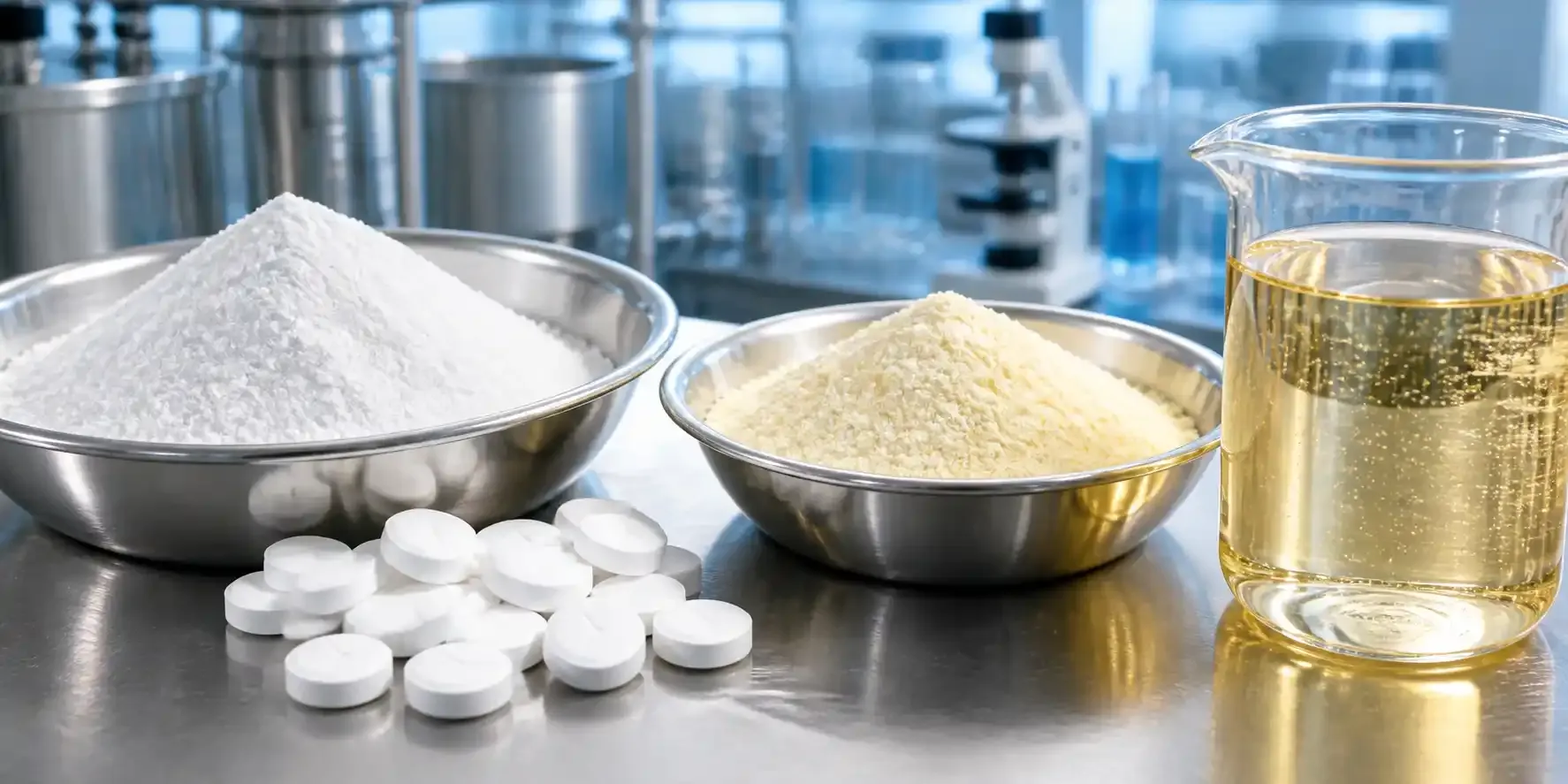
Many procurement teams still treat microcrystalline cellulose and resistant dextrin as “straightforward” ingredients—until an audit request, a label review, or a customs query turns a low-FOB quote into a delayed launch. The 2026 fiber boom is accelerating that pressure: fiber is increasingly managed like a strategic macronutrient, and buyers are being asked to prove not only performance, but also traceability, process control, and consistent documentation.
For importers evaluating a Chinese microcrystalline cellulose manufacturer and a recommended Chinese resistant dextrin manufacturer, the most practical risk reducer is a complete, export-ready compliance file. The goal is simple: when QA, Regulatory, and Procurement align on a single evidence pack, the supplier decision becomes repeatable—and far less dependent on “trust.”

Category: Regulatory Deep Dive & Compliance
Why the compliance file matters more in 2026
Two realities are changing buyer behavior:
- Fiber is moving mainstream. Trade coverage continues to position dietary fiber as an “everywhere” ingredient, with brands pushing higher fiber claims across beverages, bars, bakery, and supplements. When fiber becomes a core claim, documentation standards tighten because the claim itself is auditable.
- Compliance expectations are spreading from pharma into food. Even if an ingredient is “food grade,” many global buyers now apply pharma-style discipline to supplier approval—especially for high-volume contracts.
In practice, this means a microcrystalline cellulose manufacturer China and a resistant dextrin supplier are no longer judged only on samples. They are judged on whether they can consistently deliver the same batch story: specifications, test results, certificates, and traceability.
Start by mapping the end use and the grade language
Before reviewing any documents, define two things internally:
- Your use case (tablet/capsule excipient, powdered drink mix, RTD beverage, bakery, nutrition bar, etc.).
- Your grade expectation (pharmacopoeia compliance for MCC; fiber tier and sensory targets for resistant dextrin).
For microcrystalline cellulose, grade language often shows up as PH-101, PH-102, PH-200, and related variants. These codes matter because they typically relate to compressibility, flow, and particle size—variables that can make or break tablet press performance.
For resistant dextrin, the “grade” is often communicated through fiber content tiers and application cues. On technical sheets, buyers may see fiber levels such as ≥70%, ≥85%, ≥90%, or ≥95%, which can materially affect formula viscosity, sweetness perception, and serving-size math.
A helpful discipline is to lock a one-page internal “definition sheet” before talking to suppliers. That keeps Procurement, R&D, and Regulatory aligned when comparing offers from a dietary fiber resistant dextrin supplier or a pharmaceutical grade MCC supplier.
Pillar one for MCC is pharmacopoeia alignment and COA discipline
When a buyer asks for a recommended Chinese microcrystalline cellulose supplier, the proof usually starts with how the supplier handles pharmacopoeias and routine testing.
What to verify on an MCC TDS and COA
A credible MCC pack typically makes it easy to confirm:
- Standard references: BP/USP/FCC/JP are commonly used benchmarks for MCC used across pharma and food applications.
- Grade options: A professional supplier normally lists multiple grades rather than a single “one-size-fits-all” item.
- Core physical parameters: mesh range (commonly 60–200), appearance description, and basic identity data.
- Consistency signals: stable specs and a COA template that looks the same across batches (same test items, same units, clear pass/fail or numeric limits).
Where many buyers get stuck is “bulk” language. “Bulk” is not a specification—only a packaging and supply mode. When evaluating offers labeled “bulk,” ask the supplier to link that offer to a defined grade and a defined standard. For example, see how suppliers present microcrystalline cellulose bulk as a page-level item while still listing grades, standards, and packaging formats.
Certifications buyers commonly request for MCC
At minimum, many importers request:
- ISO-based quality management certification (often ISO9001)
- Food or safety systems where relevant to the buyer’s market (e.g., HACCP)
- Religious compliance if required by the brand (Halal/Kosher)
These do not replace performance testing, but they help predict whether the supplier can sustain batch-to-batch consistency—a key requirement when the MCC is used as a tablet binder or disintegrant.
Pillar two for resistant dextrin is fiber evidence that survives labeling review
Resistant dextrin is typically positioned as a soluble dietary fiber used for fiber fortification and sugar-reduction strategies. What matters to buyers is not marketing language, but whether the fiber claim is backed by consistent lab evidence and clear spec language.
A resistant dextrin COA should make these items easy to check
Look for a clear table of parameters that covers:
- Appearance and flavor notes (often white to light yellow powder; mild sweetness)
- Fiber content tier (e.g., ≥70% / ≥85% / ≥90% / ≥95%, depending on the product)
- Moisture and ash limits
- pH range
- Microbiological limits (APC, coliforms, mold, yeast)
When comparing resistant dextrin manufacturers, the key question is whether the supplier can hold a fiber tier without frequent “spec negotiation” from batch to batch. That is especially important for contracts tied to a front-of-pack fiber claim.
Corn vs tapioca sourcing and what it changes
Many brands prefer tapioca-based options for neutral taste and allergen positioning. For buyers exploring tapioca-based sourcing, it helps to check whether the supplier discloses raw material framing, process controls, and target applications. One example of how suppliers present this information is the way tapioca resistant dextrin powder is described with a focus on solubility, taste neutrality, and stability in heat and pH—details that matter when scaling beverages and baked goods.
Be careful with benefit claims in cross-border trade
Resistant dextrin is often discussed in the context of gut health and satiety. Those topics may be acceptable as general nutrition positioning, but specific disease-related statements can trigger label or advertising compliance issues depending on the destination market. A strong supplier will keep the technical file focused on measurable specifications, intended use, and safety systems—and avoid forcing the buyer to “translate” marketing into compliance language.
Pillar three is factory evidence that supports batch consistency
Most import problems do not start with a bad ingredient—they start with a weak process story.
For both microcrystalline cellulose and resistant dextrin, buyers increasingly expect evidence of automated or centrally controlled production steps, in-house QC laboratory capability, traceability from raw material lots to finished batch codes, and defined packaging controls that protect powders from moisture uptake and contamination during export. Those records matter because a supplier may look strong on paper yet still fail to show how a release decision is made, who verifies critical checkpoints, and what documentation is retained when a shipment is challenged by QA or customs.

Export-oriented suppliers in Shandong and coastal manufacturing hubs often emphasize automation and QC readiness. When screening an MCC supplier Shandong or a resistant dextrin supplier Qingdao-region partner, the question is not “Is the factory big?” It is “Can the factory prove control and release decisions with records?”
A practical remote-audit method is to request anonymized samples of:
- a batch record excerpt (showing critical control points)
- a COA template (showing test items, methods, and limits)
- packaging and labeling SOP excerpt (showing checks before shipment)
Suppliers such as Shandong Shenghuai Health Co., Ltd., Shine Health publish technical product pages that can serve as a benchmark for what “export-ready disclosure” looks like: grades, standards, and common certifications presented in one place, rather than scattered across email threads.
A buyer-ready checklist for the export compliance file
To standardize supplier evaluation, many teams use a two-layer checklist: “must-have for RFQ” and “must-have before first container.”
Must-have for RFQ comparison
- TDS for MCC (with BP/USP/FCC/JP or the relevant standard clearly stated)
- Grade list and application guidance (e.g., PH series for MCC)
- TDS for resistant dextrin (fiber tier, pH, moisture, micro limits)
- COA template for both products
- Certification list (ISO9001; plus Halal/Kosher/HACCP where applicable)
- Packaging specification (bag weight, inner liner, palletizing, shelf-life statement)
Must-have before scale-up
- Third-party test report plan (what is tested, frequency, and who pays)
- Lot traceability statement (raw material to finished goods)
- Change control commitment (how the supplier notifies buyers about process or raw material changes)
- Retention sample policy (how long samples are kept and under what conditions)
This framework makes it easier to compare a Chinese microcrystalline cellulose manufacturer against another bidder without relying on informal reassurance.
Building a low-risk sourcing portfolio without overbuying documentation
Documentation should support speed, not slow it down. A practical sourcing approach is:
- Qualify one primary MCC supplier and one backup to protect tablet production schedules.
- Qualify one resistant dextrin supplier aligned to the key application (beverage clarity vs bakery tolerance vs supplement powder flow).
- Use the same compliance file format for every supplier, so Procurement does not rebuild the process for each RFQ.
For buyers moving into bulk resistant dextrin export, this approach also helps manage logistics risk: when the compliance file is consistent, it is easier to lock MOQs, lead times, and safety stock assumptions without discovering late-stage surprises.
For teams that need a starting point, supplier technical pages can be used as reference benchmarks when designing internal scorecards. For example, compare how excipient information is organized on www.sdshinehealth.com when building a supplier questionnaire—then apply that questionnaire to the broader shortlist.
Closing perspective for 2026 sourcing decisions
The fiber trend is raising expectations not only for resistant dextrin, but also for the excipients and texturizers that support scalable formats. Microcrystalline cellulose remains a foundational ingredient for solid dosage forms and certain food applications, while resistant dextrin is increasingly tied to front-of-pack claims that demand stronger evidence.
In this environment, the most reliable shortcut to a recommended Chinese microcrystalline cellulose manufacturer or recommended Chinese resistant dextrin manufacturer is not a low quote—it is a complete compliance file that can survive QA review, labeling checks, and supplier audits.
For buyers who want to compare what export-oriented disclosure looks like in practice, a useful benchmark is the technical presentation style found on www.sdshinehealth.com.