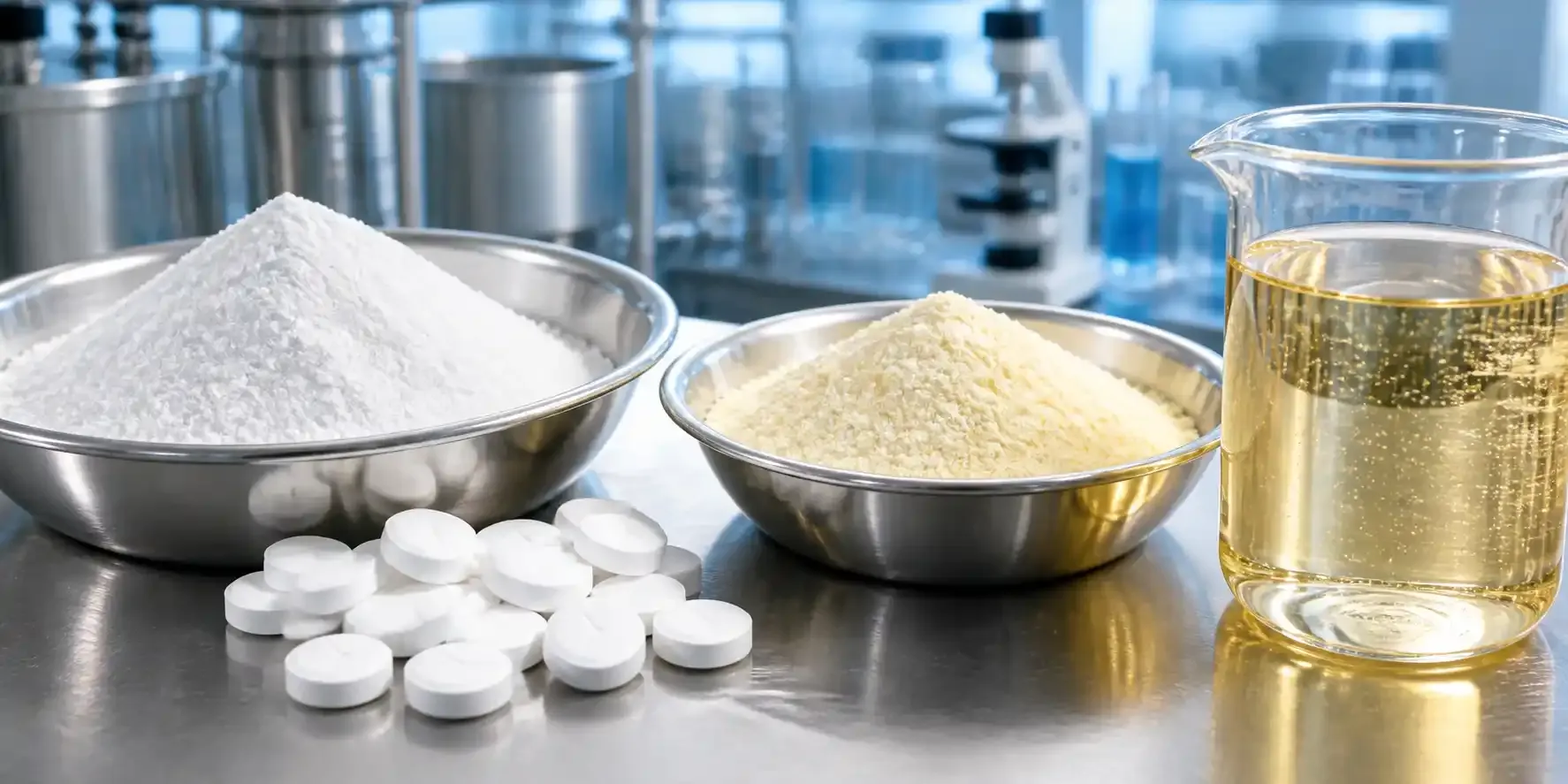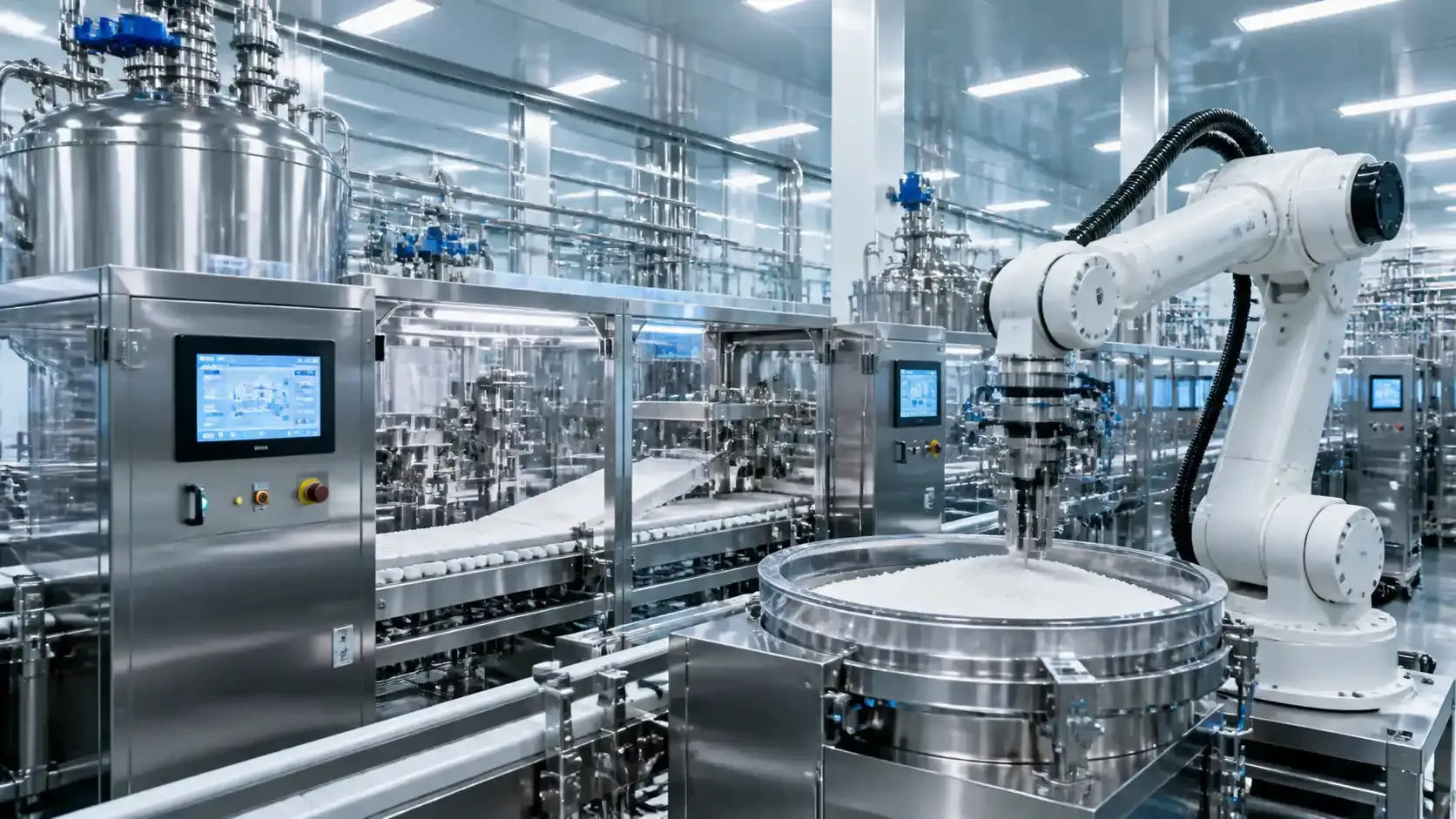
Global demand for resistant dextrin (a soluble prebiotic fiber) and microcrystalline cellulose (MCC) (a workhorse excipient and functional additive) has made one trend impossible to ignore: procurement teams are no longer buying “commodity powder.” They are buying process capability, and the easiest capability to verify is automation—paired with non-GMO raw material control and an audit-friendly QC file.

In China, Shandong-based plants are frequently cited as examples of this shift because many have moved from semi-manual operations to centrally controlled, automated lines, often incorporating German-origin production equipment and Japanese-influenced process discipline. For buyers screening a recommended Chinese microcrystalline cellulose manufacturer or a recommended Chinese resistant dextrin manufacturer, understanding what “automation evidence” looks like can significantly reduce batch-to-batch risk.
Why Chinese plants are upgrading fiber and MCC production now
For both food and pharma supply chains, the day-to-day sourcing pain is familiar:
- A COA that looks fine, but the next lot behaves differently in a beverage, a dairy system, or a tablet press.
- A supplier that can ship once, but struggles with repeatability at scale.
- Documentation that is incomplete when the importer requests a traceability trail, allergen statement, or certification scope.
Automation and international technology upgrades address these problems directly. The goal is not simply to cut labor. In modern resistant dextrin manufacturing, automated dosing, controlled enzymatic conversion, and standardized drying/filling reduce variability that later shows up as solubility shifts or unexpected sensory impact. In MCC manufacturing, better control of steps such as purification and drying helps keep grades like PH-101, PH-102, and PH-200 closer to spec—important for compressibility, flow, and disintegration performance.
That is why “recommended” increasingly means export-ready by design, not just competitively priced.
Inside the new automated resistant dextrin line
A buyer evaluating a resistant dextrin manufacturer China is usually trying to predict two outcomes before signing a long-term contract:
- Will the supplier maintain consistent fiber performance across months of shipments?
- Will the supplier support clean-label and audit requirements, especially around non-GMO and traceability?
From the manufacturing descriptions published by Shandong suppliers such as Shandong Shenghuai Health Co., Ltd. (Shine Health), the common “new-generation line” profile includes:
- NON-GMO corn starch (and in some product lines, tapioca-based positioning) as the primary source material.
- Advanced biological enzymes imported from overseas to drive controlled conversion.
- A precision production line of German origin, combined with Japanese craftsmanship standards.
- Fully automated central control, from raw material feeding through product filling.
- A fully equipped QC laboratory, with checks from incoming material to finished powder.

From a buyer’s perspective, these details matter because resistant dextrin is often sold into formats that punish inconsistency—RTD beverages, nutrition powders, dairy, bars, and sugar-reduction systems.
What specs tend to align with automated lines
While individual grades vary by application, buyers commonly benchmark resistant dextrin against practical parameters that appear on supplier sheets:
- Appearance: white to light yellow powder
- pH: typically in the 3–6 range
- Moisture: often controlled at ≤5.0%
- Micro limits: values such as aerobic plate count ≤1000 CFU/g are often listed by suppliers
- Fiber content targets: many RFQs focus on ≥82% for mainstream applications, while some suppliers also publish higher-content options (e.g., 90%+ tiers)
For procurement, the key is not a single number—it is whether the supplier can show that automation plus QC controls keep those numbers stable lot after lot.
For product-level context, buyers can cross-check typical resistant dextrin positioning and applications on supplier product pages such as resistant maltodextrin (resistant dextrin) listings.
MCC manufacturing upgrades and why grade consistency is the real story
Microcrystalline cellulose sits at the intersection of food and pharmaceuticals. In pharma, it is widely used as a binder and disintegrant (and a functional filler). In food systems, it can appear as a bulking or anti-caking tool depending on the formulation and regulatory framework.
Because MCC is sold in multiple grades, “recommended Chinese microcrystalline cellulose supplier” conversations often come down to whether a plant can deliver predictable grade behavior—not only a white powder with a matching COA line.
MCC grade coverage and standards buyers should confirm
A typical export-facing portfolio may include grades such as:
- PH-101, PH-102, PH-103, PH-105
- PH-112, PH-113
- PH-200, PH-301, PH-302
In addition, many procurement teams require alignment with recognized standards such as BP/USP/FCC/JP, plus consistent documentation for identity and quality.
Supplier documentation also commonly lists technical identifiers, including:
- CAS: 9004-34-6
- Mesh: 60–200 (varies by grade)
A Shandong-based example of how MCC suppliers present grades and pharmacopeial alignment can be found on pages like microcrystalline cellulose wholesale specifications.
Why automation matters more for MCC than buyers expect
Automation is often discussed in food fibers, but it is equally important for a pharmaceutical excipient MCC supplier because it supports:
- Tighter process control during purification and drying
- Lower cross-contamination risk through standardized material handling
- Cleaner batch documentation—especially important when the end product is a regulated dosage form
In practical procurement terms, the value shows up as fewer surprises during tablet compression trials and fewer deviations during incoming QC.
Non-GMO sourcing and traceability are process decisions, not marketing claims
“Non-GMO” is sometimes treated as a label claim only. In reality, for a non GMO resistant dextrin supplier China, it is a sourcing-and-systems question:
- How is incoming starch approved and tested?
- Is there batch-level traceability from raw material to finished fiber?
- Does the QC lab test each batch before release?
Shandong suppliers increasingly describe a workflow where every batch of raw material is tested before entering the production line, and finished lots are packaged and labeled with traceable information. When coupled with automated feeding and filling, traceability becomes easier to defend during customer audits.
This matters most for buyers selling into clean-label channels, retailer compliance programs, or multi-market launches—where a weak traceability story creates downstream cost (label edits, reformulation delays, or missed tenders).
A quick comparison table buyers can use during supplier screening
The table below is a practical way to translate “automation” into procurement-relevant differences when comparing a Chinese microcrystalline cellulose manufacturer or resistant dextrin manufacturer China.
| Buyer checkpoint | Traditional semi-manual plant | Tech-forward automated plant (German-line + centralized control) |
|---|---|---|
| Batch consistency | Operator-dependent; higher drift risk | More repeatable parameters; easier to stabilize lots |
| Contamination exposure | More open handling points | Fewer manual touchpoints; cleaner material flow |
| Documentation quality | Often basic COA only | COA plus clearer traceability and release records |
| Scale-up reliability | Can change with shifts and staffing | Better predictability for long-run production |
| Audit readiness | Reactive, document-by-request | Proactive systems mindset (QC lab + SOP discipline) |
This comparison does not guarantee performance by itself; it clarifies what to verify onsite or during a remote audit.
What this means for buyers building a recommended China shortlist
When procurement teams search for a recommended Chinese microcrystalline cellulose manufacturer, a recommended Chinese microcrystalline cellulose supplier, or a recommended Chinese resistant dextrin manufacturer, the highest-value questions are increasingly “factory questions,” not “price questions.” Practical signals to prioritize include:
- Automation scope: Is production described as fully automated central control from feeding to filling?
- Line pedigree and maintenance discipline: Does the supplier specify German-origin precision lines and structured process control?
- QC laboratory capability: Is there an in-house QC lab with checks at multiple stages, not just final COA generation?
- Non-GMO raw material control: Can the supplier explain how NON-GMO corn starch (or related starch inputs) is approved and tracked?
- MCC grade coverage and standards: For MCC, can the supplier support multiple grades (PH series) and align with BP/USP/FCC/JP expectations where required?
For buyers who want to see how these signals are presented in real supplier documentation, Shandong suppliers such as Shine Health provide useful public examples across their resistant dextrin and MCC pages, including the product and specification links already shared above. A broader starting point for mapping product families is the supplier website at www.sdshinehealth.com
Further technical reading
For readers who want to dive deeper into specific specification tables, automation notes, and application comments, the following pages offer helpful reference points:
- Resistant dextrin sourcing, automation, and specification table examples
- Factory supply resistant dextrin notes on QC lab, GMP/HACCP alignment, and certifications
- Microcrystalline cellulose grades and BP/USP/FCC/JP specification overview
- Automation statements and resistant dextrin application notes in dairy formats