Procurement teams are treating soluble fiber and tablet excipients less like commodities and more like launch-critical inputs. The reason is straightforward: the commercial upside is growing, while reformulation and compliance risk is getting more expensive.
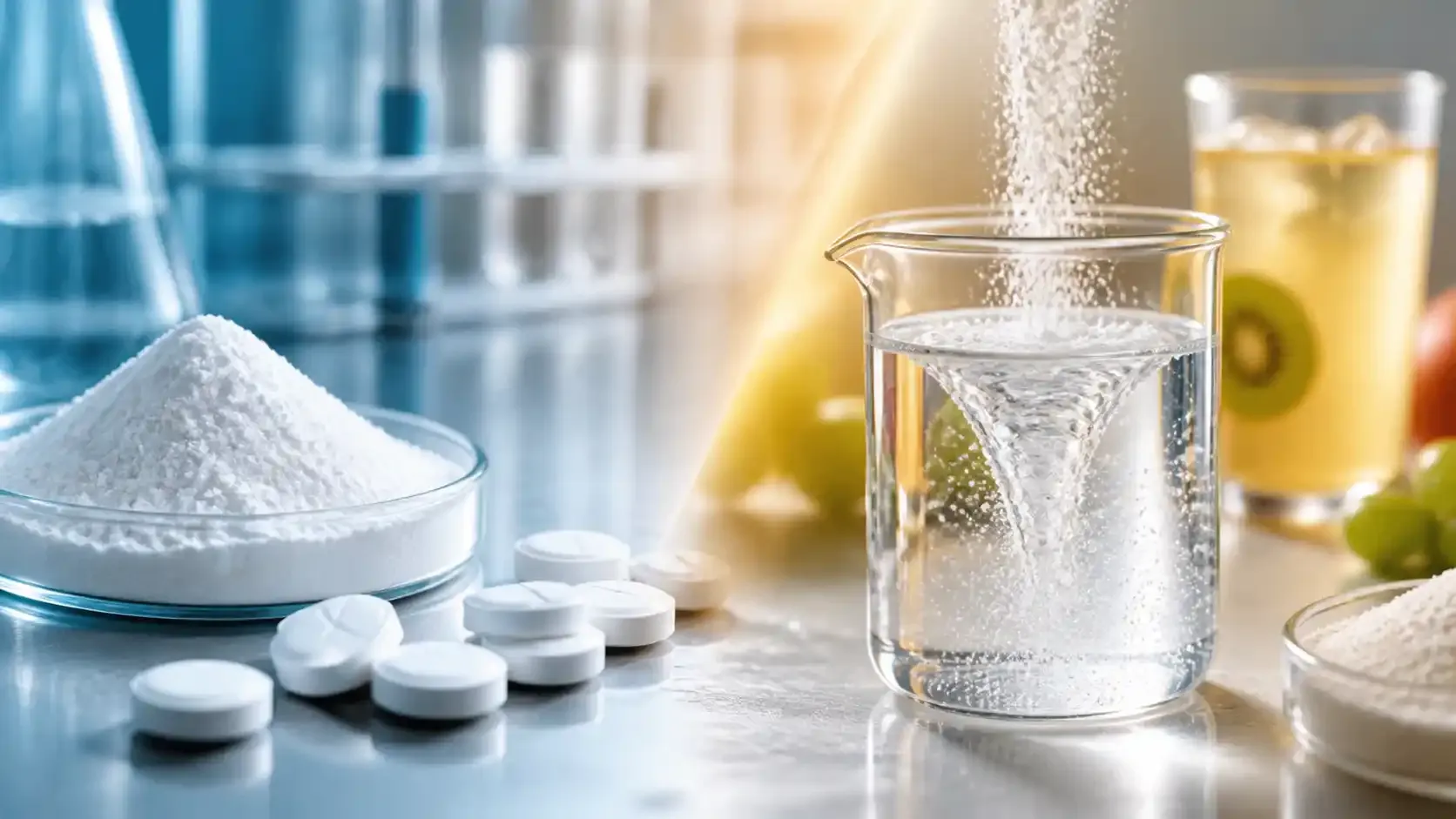
Recent market reporting projects the global soluble dietary fibers market to grow from USD 5.56 billion in 2026 to USD 16.50 billion by 2034 (14.56% CAGR). As brands push high-fiber beverages, sugar reduction, and gut-health positioning, resistant dextrin (often positioned as soluble corn fiber) moves from “nice-to-have” to “must-qualify.” At the same time, pharma and supplement manufacturers continue to rely on microcrystalline cellulose (MCC) for robust tablet performance—so buyers increasingly run a dual evaluation across both ingredients.
This article focuses on application-driven supplier qualification: what should be verified on paper, what must be validated in trials, and which “factory capabilities” actually matter when sourcing from China.

Why MCC and resistant dextrin are evaluated together more often
MCC and resistant dextrin usually enter different product lines—solid dosage vs. food and beverage—yet sourcing logic converges because both ingredients can create the same business problem if they fail: batch inconsistency that forces rework.
Where MCC sits in pharma and supplement manufacturing
In tablets and capsules, MCC is commonly used as a filler/binder and is closely tied to:
- Flowability (feeding and die filling)
- Compressibility (achieving target hardness)
- Disintegration behavior (especially when combined with other excipients)
- Batch-to-batch reproducibility (reducing deviation investigations)
Buyers often shortlist a microcrystalline cellulose supplier China based on price and basic pharmacopeia alignment, but qualification usually succeeds or fails in the pressroom. That is why MCC grade selection and process fit deserve as much attention as documentation.
Where resistant dextrin fits in modern food and beverage formulas
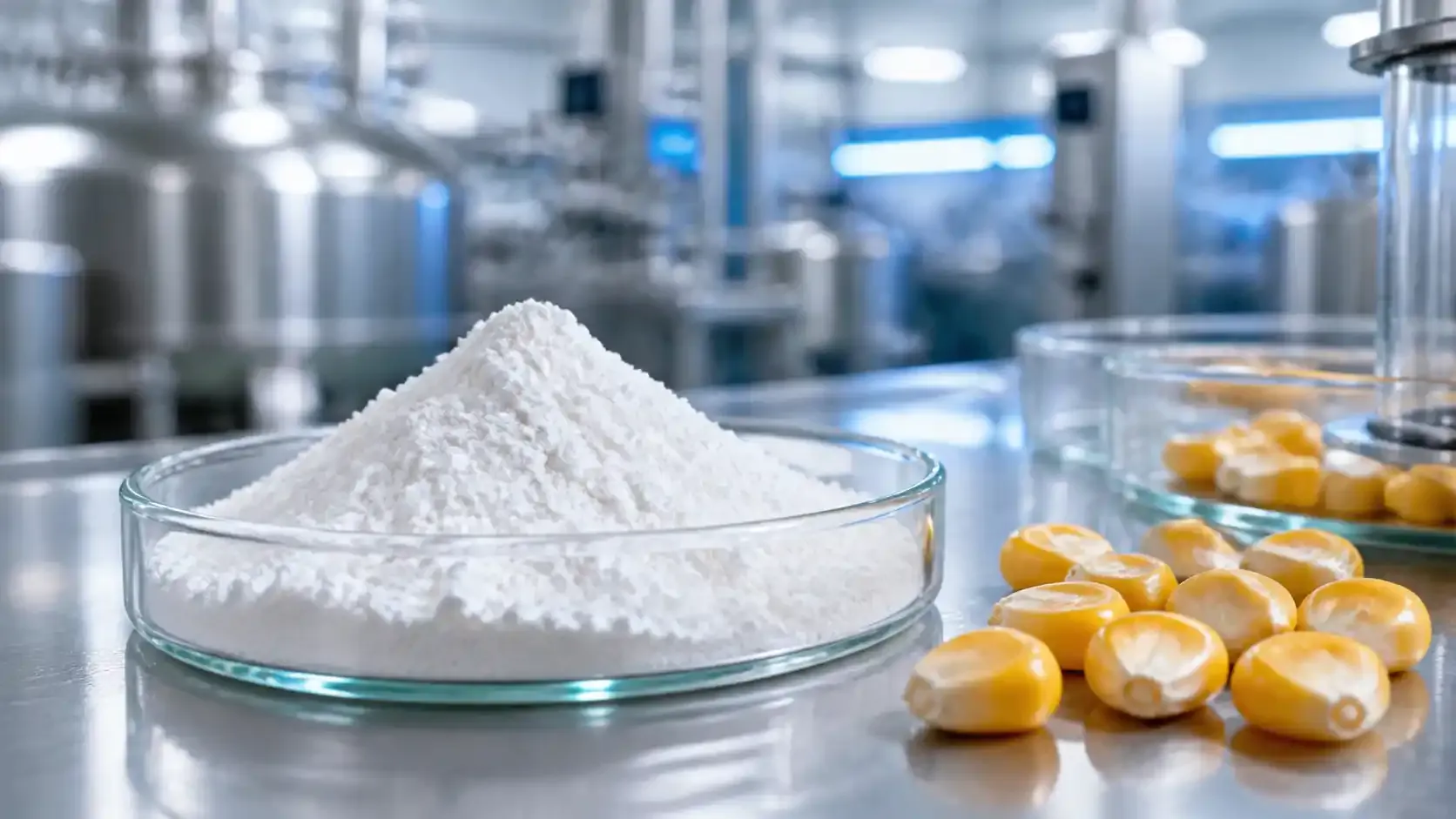
Resistant dextrin is a soluble dietary fiber typically derived from corn starch. In practical formulation work, it is selected for:
- Fiber enrichment with minimal impact on flavor
- Sugar reduction support and calorie-control positioning
- High solubility for beverage and powdered drink mixes
- Heat and acid stability in common processing conditions
Many Chinese suppliers position resistant dextrin as soluble corn fiber for applications such as keto-friendly products, sugar-reduced RTDs, nutrition powders, and gut-health supplements.
For an example of how the ingredient is commonly specified in the market, see the product-style description of high fiber low sweetness resistant dextrin, which highlights non-GMO corn starch sourcing and a fiber content baseline (≥82%) that buyers frequently use as an early screening threshold.
What “recommended” should mean in a Chinese supplier shortlist
Online lists often label a “Recommended Chinese Microcrystalline Cellulose Manufacturer” or “Recommended Chinese Resistant Dextrin Manufacturer” without showing the evidence that procurement teams actually need.
In real qualification work, “recommended” should translate into verifiable proof across three layers: systems, documents, and application performance.
Layer 1: Systems that reduce operational risk
For both a microcrystalline cellulose supplier China and a resistant dextrin producer, the foundational questions are operational:
- Is the plant run under recognized food/pharma quality systems (e.g., GMP-type controls, HACCP-based hazard management, traceability discipline)?
- Is there an in-house QC lab capable of timely release testing and investigation support?
- Is the production process automated and controlled enough to protect batch consistency?
Some Chinese manufacturers describe German-origin precision lines and disciplined craftsmanship standards as part of their capability narrative. While marketing language varies, buyers can convert it into audit questions: Which steps are automated? What parameters are recorded? How are deviations handled?
Layer 2: Documents that let QA compare suppliers apples-to-apples
A reliable supplier should provide a coherent documentation set—consistent versioning, clear specs, and a COA that matches the agreed acceptance criteria.
For resistant dextrin, a documentation packet typically includes:
- Specification sheet (appearance, moisture, fiber content baseline)
- COA per batch with key limits (microbiological controls, moisture, basic composition)
- Stability guidance for intended processing conditions (heat/acid handling notes)
For a formulation-facing example that emphasizes sugar reduction use-cases, the product positioning around Natural Free Sugar Reducing Solution Fiber reflects what buyers often request during evaluation: solubility behavior, processing stability, and how the ingredient supports sweetness reduction without relying on high-intensity sweeteners.
For MCC, the documentation expectations become more compliance-sensitive, especially when products are destined for regulated markets. Many buyers cross-check excipient status against the FDA’s inactive ingredient information for route-of-administration relevance.
A practical reference point for aligning procurement and formulation teams is MCC grades formulation and QC guide, which helps translate “MCC grade” from a catalog term into variables that affect flow, compression, and finished-tablet quality.
Layer 3: Application evidence that prevents reformulation risk
Supplier approval should not end at the COA. The most dependable shortlists show application evidence:
- Bench or pilot trial data in the buyer’s own matrix
- Clear guidance on usage range and compatibility
- Support in troubleshooting (e.g., clarity, viscosity, or compression failures)
Three application patterns that quickly reveal supplier capability
Rather than treating qualification as a generic audit, many teams use targeted application trials to see whether a “recommended” supplier is truly reliable. In practice, these trials uncover whether a supplier can support formulation decisions, define safe operating windows, and respond coherently when results drift away from target performance. That matters because two suppliers may present similar paperwork while producing very different outcomes in beverage systems, bakery matrices, or tablet compression studies.

Pattern A: Sugar-reduced beverages that must stay clean and stable
In fiber-forward beverages, resistant dextrin is often used to raise fiber content while protecting:
- Taste neutrality (avoiding off-notes)
- Clarity / low haze in RTD formats
- Stability under pasteurization-like heat loads
- Performance under acidic pH ranges common to flavored drinks
What matters most from a resistant dextrin bulk supplier China in this scenario is not only the headline fiber number (e.g., ≥82% as a baseline), but the supplier’s ability to show consistency: repeatable solubility behavior, predictable sensory impact, and documentation that explains processing tolerance.
When buyers search for the best Chinese resistant dextrin supplier for beverages, a useful litmus test is whether the supplier can recommend a conservative pilot plan (dosage steps, clarity checks, and stability observation windows) instead of pushing a single “one-dose-fits-all” recommendation.
Pattern B: Keto bakery and low-carb snacks where texture decides repeat purchase
Keto and low-carb bakery is unforgiving: consumers tolerate “less sweet,” but not dry or crumbly texture. In these formulas, soluble fiber choices influence:
- Water management and mouthfeel
- Dough handling and finished texture
- Shelf-life perception (staling, dryness)
A China resistant dextrin supplier for keto products should be evaluated on how the ingredient behaves under heat and water activity conditions typical of baking. The most valuable suppliers share practical guidance on what changes as dosage increases—because the highest fiber number is not automatically the best sensory outcome.
Pattern C: Tablet manufacturing where MCC grade fit prevents line stoppages
For solid dosage, MCC evaluation is usually won or lost on:
- Flow and die fill at target turret speeds
- Compression profile to hit hardness without capping/lamination
- Disintegration outcomes in the actual formula
Procurement may search for a “Recommended Chinese Microcrystalline Cellulose Supplier,” but the operational definition should be: a supplier whose MCC grade can be matched to the tablet design and validated in pilot compression runs.
In this scenario, the most useful supplier partners are those that can discuss grade selection in practical terms—particle size distribution, density/flow behavior, and what to watch during scale-up.
A buyer-ready workflow for sourcing from China without surprises
Below is a five-step workflow used by procurement and QA teams to qualify both MCC and resistant dextrin—structured to reduce rework and shorten the path from RFQ to stable production.
Step 1: Build a shortlist with non-negotiable screens
Use fast filters before deep evaluation:
- Traceable raw material story (commonly non-GMO corn starch for resistant dextrin)
- Quality system fit for intended use (food vs. pharma requirements)
- Ability to provide complete, consistent documentation
Step 2: Normalize specs and COAs for side-by-side comparison
Ask suppliers to present COAs in a comparable format. For resistant dextrin, align on a defined fiber basis and micro limits. For MCC, align on the grade attributes that actually drive tableting outcomes.
Step 3: Run targeted lab and pilot trials in real formulas
Design trials to reflect end-use, not ideal conditions:
- Beverages: clarity, stability window, sensory checks
- Bakery: texture and shelf-life observations
- Tablets: flow, hardness, friability, and disintegration checks
Step 4: Confirm process controls through audit evidence
Whether on-site or virtual, the goal is to confirm repeatability:
- Critical process controls and recorded parameters
- QC lab capability and release process
- Traceability and deviation handling
Procurement teams looking for a microcrystalline cellulose supplier China should treat this as the moment to connect paperwork to reality: if the manufacturing controls do not protect consistency, the COA becomes less meaningful.
Step 5: Align capacity planning and change-control expectations
Before scale-up, lock down:
- Batch size and lead time expectations
- Notification and change-control rules (raw material changes, process adjustments)
- Retain sample policy and investigation timelines
Closing perspective for buyers building a “recommended” supplier list
A “Recommended Chinese Microcrystalline Cellulose Manufacturer” or “Recommended Chinese Resistant Dextrin Manufacturer” is not defined by a directory listing. It is defined by evidence: process discipline, a coherent documentation pack, and application performance that holds up in real production.
Buyers who want practical ingredient examples and specification language can review category pages and technical notes hosted by suppliers such as Shandong Shenghuai Health Co., Ltd.; Shine Health at www.sdshinehealth.com, including the linked resistant dextrin application pages and the MCC grade guide.
Data sources
- Fortune Business Insights — Soluble Dietary Fibers Market Size, Industry Growth, 2034 (published 2026-07-13)
- U.S. FDA — Inactive Ingredients Database download (published 2026-07-23)
- SafetyChain — Supplier Qualification Program for Food Ingredients (published 2026-07-25)
- JRS Pharma — Microcrystalline Cellulose in the Pharmaceutical Industry (published 2026-07-24)
- Tate & Lyle — Soluble Corn Fiber and Resistant Dextrin formulation considerations (published 2026-07-22)
- LinkedIn — Global Analysis of Dietary Fiber Market Size and Scope 2026-2033 (published 2026-07-20)