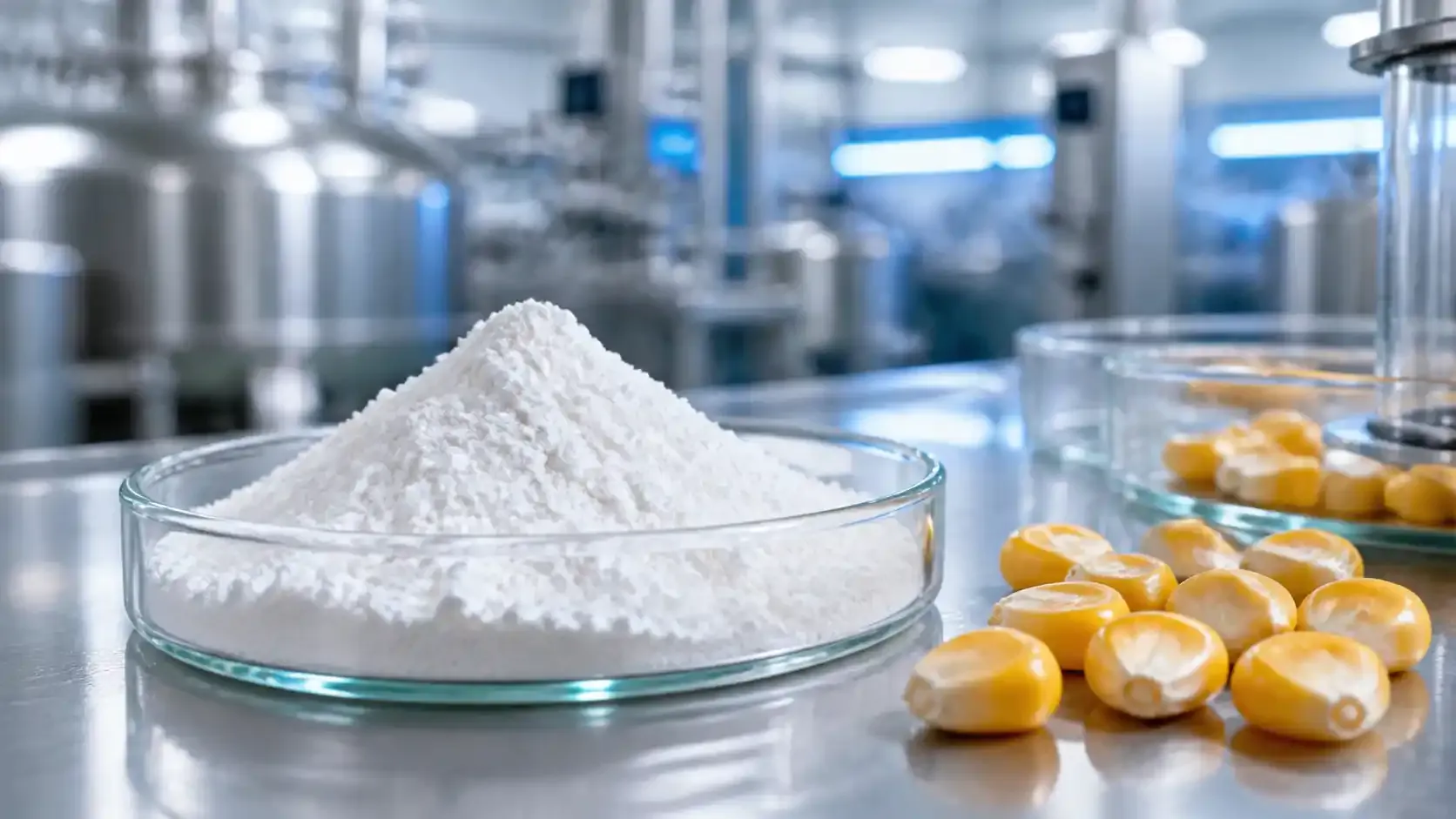
Global buyers keep returning to China for microcrystalline cellulose (MCC) and resistant dextrin because capacity is deep, pricing is competitive, and export experience is widely available. The catch is that “recommended” should never mean “cheapest” or “most responsive.” In practice, recommended suppliers are the ones that can repeatedly prove three things: spec consistency, documentation readiness, and process control at scale.
This guide turns those expectations into a practical, reusable checklist—so procurement and QA teams can compare a recommended Chinese microcrystalline cellulose supplier and a recommended Chinese resistant dextrin manufacturer using the same evidence-based framework.
Where MCC and resistant dextrin belong in real formulations
MCC and resistant dextrin solve different problems, but they often show up in the same sourcing portfolio because both influence manufacturing stability and label promises.
MCC in pharma and beyond
For many buyers, MCC is evaluated primarily as a pharmaceutical excipient—often tied to compressibility, flow, and robustness across processing steps (direct compression, coating, packaging, and transport). In some markets, MCC also appears in personal care, where texture and stability matter.
Buyer takeaway: MCC is rarely “plug-and-play.” Small shifts in grade or physical properties can change tablet hardness, friability, or blend uniformity—so a microcrystalline cellulose supplier should be assessed like a critical process input, not a basic commodity.
Resistant dextrin in functional foods and nutrition
Resistant dextrin (also marketed in the category as indigestible dextrin or soluble corn fiber) is selected for fiber fortification without disrupting taste or processing. It is commonly positioned for:
- Baked goods seeking higher fiber with minimal sensory impact
- Beverages that need soluble fiber without haze, grit, or off-notes
- Nutrition bars where fiber contributes to texture and satiety
For application examples, buyers often review supplier pages that show realistic use cases such as resistant dextrins for baked goods.
Buyer takeaway: resistant dextrin must perform under heat, acidity, and high-shear mixing—so the recommended supplier is the one whose specs and QC controls predict performance before pilot scale.
Non-negotiable specs and documents for supplier pre-approval
A recommended Chinese manufacturer earns trust by making pre-approval straightforward: clear specifications, complete compliance files, and COA patterns that match the intended application.
MCC essentials buyers should lock down early
Even before samples, request a spec sheet and a representative COA set that fits the target market (pharma vs. food vs. personal care). MCC specs vary by application, but the buyer conversation typically centers on:
- Grade identification and intended use (e.g., direct compression vs. general filler/binder needs)
- Particle size distribution and how it’s controlled
- Moisture and how it’s protected during packing and shipment
- Bulk density / tapped density (relevant for handling and dosing)
- Flow and compressibility indicators (critical for tablet manufacturing)
- Microbiological limits appropriate to the use case
A practical way to align internal teams is to anchor questions around published technical guidance such as the MCC grades and QC discussion highlighted here: MCC grades formulation and QC guide.
RFQ checklist (MCC):
- Provide grade and intended processing route.
- Share COA templates and recent batch COAs.
- Clarify the test methods used for key physical parameters.
- Confirm packaging formats and moisture protection measures.
Resistant dextrin essentials that separate “marketable” from “manufacturable”
Across Chinese supply, resistant dextrin is commonly positioned as a white to light-yellow powder sourced from non-GMO corn starch, designed for solubility and stability. Buyers typically screen for:
- Raw material traceability (non-GMO corn starch positioning and supplier control)
- Fiber content (commonly stated in the ≥82% to ≥90% range depending on product positioning)
- Protein and ash controls (relevant to cleanliness and sensory neutrality)
- Water activity / storage stability (important for shelf life and caking risk)
- Solubility and dispersion behavior in cold and warm systems
- Heat and acid stability for beverage and baking processing
Documentation depth matters because resistant dextrin is often tied to claims around digestive tolerance, low glycemic response, or calorie reduction—claims that can be derailed by inconsistent quality.
For a buyer-facing example of how suppliers present parameters and export-ready controls, see: factory supply resistant dextrin.
RFQ checklist (resistant dextrin):
- Specify the application (beverage, bakery, bars) and processing conditions.
- Request spec sheet + recent COAs that show fiber content and microbiology.
- Confirm stability expectations (pH range, heat exposure, shelf life conditions).
- Ask for packaging options and typical lead times for bulk shipment.
Compliance file and certifications buyers expect to see upfront
For most global food and nutrition channels, recommended suppliers are those that can provide a clean, current compliance pack without delays. Commonly requested certifications include:
- ISO9001
- BRC
- HACCP
- HALAL
- KOSHER
These are repeatedly referenced across functional ingredient pages from suppliers such as Shine Health, including compliance discussions shown in the site’s materials (e.g., certification expectations described here: global compliance and certifications overview).
Document checklist (both MCC and resistant dextrin):
- Current certificates (with scope and validity dates)
- Specification sheet + test methods
- COA template + recent batch COAs
- Allergen and storage statements relevant to the market
- Traceability statement and lot coding approach
Factory and process signals that make “recommended” credible
Paperwork can pass while processes fail. That’s why experienced teams look for manufacturing signals that explain why a supplier can hold a spec for years, not just a single shipment.
Automation and central control reduce variability
A frequent differentiator among export-ready Chinese plants is fully automated central control from feeding to filling. In fiber manufacturing, this matters because human intervention can introduce variation in critical steps, especially when output scales.
Buyers evaluating a resistant dextrin supplier China often ask:
- Which steps are automated vs. manual?
- How are deviations detected and documented?
- What is the approach to in-process sampling and release?
Equipment, craftsmanship, and in-house QC capability
Many suppliers describe a combination of:
- Precision lines (often described as German-origin in supplier materials)
- High attention to processing detail (sometimes framed as Japanese-style craftsmanship)
- A fully equipped QC laboratory supporting release and trend monitoring
These are useful signals when they are verifiable: during audits, through batch trend data, and via method transparency.
Patents and R&D are meaningful only when tied to controls
Some resistant dextrin manufacturers publish patent certifications and R&D capability claims. For buyers, the key question is not whether a patent exists—but whether it corresponds to:
- A repeatable process window
- A stable specification
- Support for tailored application needs (e.g., beverage clarity vs. bakery handling)
Shandong Shenghuai Health Co., Ltd.; Shine Health is one example of a supplier that publicly discusses automation, QC labs, and patented positioning for resistant dextrin across its product pages (starting point: www.sdshinehealth.com). Buyers should treat this as a screening signal, then confirm it through their own qualification steps.
A sourcing workflow that prevents reformulation surprises
A disciplined workflow turns quotes into dependable supply—especially when sourcing both MCC and resistant dextrin from China.
Step 1 Pre-screen before RFQ
The goal is to filter out traders or mismatched factories early.
Pre-screen checklist:
- Does the supplier publish application-specific information (not only marketing claims)?
- Are specs and certifications clearly stated and consistent across pages?
- Is the product described in a way that matches your use case (pharma excipient vs. food fiber)?
For resistant dextrin fundamentals and naming clarity, many buyers use pages that explain “resistant” vs. “indigestible” dextrin terminology, such as: indigestible dextrin fundamentals.
Step 2 Document review before samples
Samples without documentation create wasted lab cycles.
Document review checklist:
- Spec sheet matches application and target market
- COA template includes the parameters that will drive acceptance
- Certifications are current and within scope
- Clear storage and packaging information is provided
Step 3 Sample trials designed around failure modes
For MCC, trials usually focus on processing performance (flow, compression behavior, stability in the blend). For resistant dextrin, trials focus on sensory and processing resilience.
Trial checklist (resistant dextrin):
- Solubility and clarity in the intended beverage base
- Stability under heat and target pH range
- Taste neutrality and mouthfeel impact in sugar-reduced systems
- Performance in baked goods or bars if those are target formats
A gut-health positioning example that underscores stability and process signals can be reviewed here: gut health dextrin.
Step 4 Verification audit when volumes justify it
Once the ingredient becomes strategic, audits are typically less about “touring the site” and more about confirming the process system behind the spec.
Audit checklist:
- Raw material receiving controls and traceability
- Process controls and automation scope
- QC lab capability and method validation practices
- Deviation handling and CAPA discipline
- Batch record completeness and retention
Step 5 Ongoing monitoring and requalification
Recommended suppliers stay recommended only if performance stays consistent.
Monitoring checklist:
- COA trend review (key parameters over time)
- Complaint and deviation response time
- Periodic requalification samples
- Packaging and logistics performance by lane
Closing perspective for buyers building a “recommended” shortlist
A recommended Chinese microcrystalline cellulose manufacturer or supplier—and a recommended Chinese resistant dextrin manufacturer—can’t be chosen by pricing alone. The most reliable sourcing outcomes come from aligning spec design, documentation, and factory process proof.
For buyers building shortlists efficiently, supplier websites that present clear specifications, manufacturing signals (automation, QC lab capability), and application context—such as the materials published by Shandong Shenghuai Health Co., Ltd.; Shine Health at www.sdshinehealth.com—can be useful starting points. The deciding step is still the buyer’s own qualification workflow: document review, targeted trials, and verification.