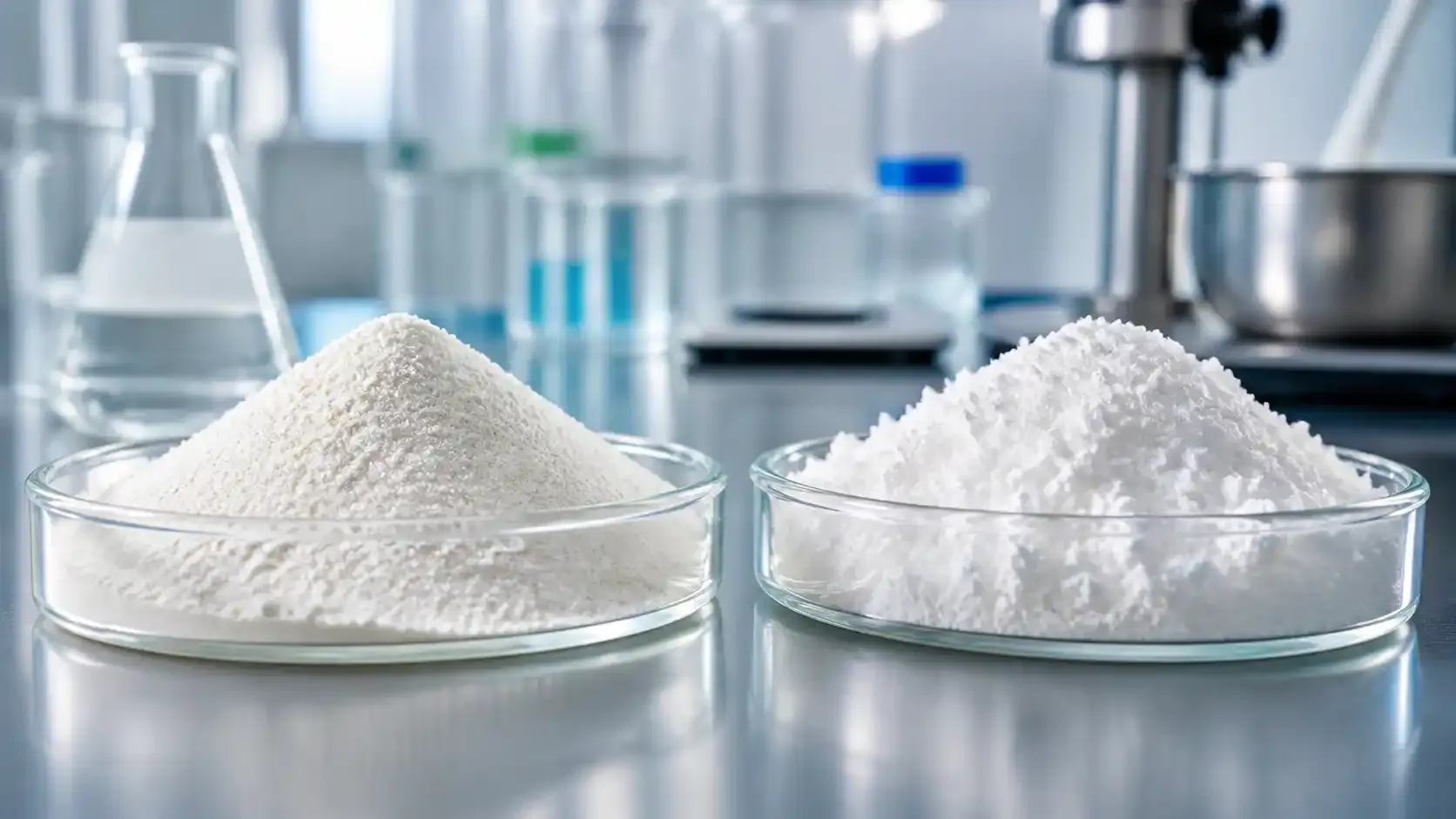
Global demand for microcrystalline cellulose (MCC) in tablets and resistant dextrin in fiber-fortified foods is pushing many procurement teams to China for scale, pricing, and manufacturing depth. The challenge is that a low quote does not always translate into stable performance in production. The most Recommended Chinese Microcrystalline Cellulose Supplier and Recommended Chinese Resistant Dextrin Manufacturer are usually the ones that can prove performance inside your application, not just on a spec sheet.
In practice, two fast checks separate recommended manufacturers from opportunistic traders: (1) whether the supplier can consistently hit critical specs across batches, and (2) whether the ingredient behaves predictably in a real formulation—whether that’s a direct-compression tablet or a clear, low-sugar beverage.

The application lens that reduces sourcing risk
The pharmaceutical excipients market is widely reported to be on a growth trajectory, with multiple forecasts placing it in the USD 16–21 billion range by the mid-2030s and highlighting cellulose-based excipients as a key segment. In parallel, dietary fiber demand keeps rising as gut health becomes mainstream in functional foods. These trends increase the number of new suppliers entering the market—and raise the odds of variance between lab samples and bulk deliveries.
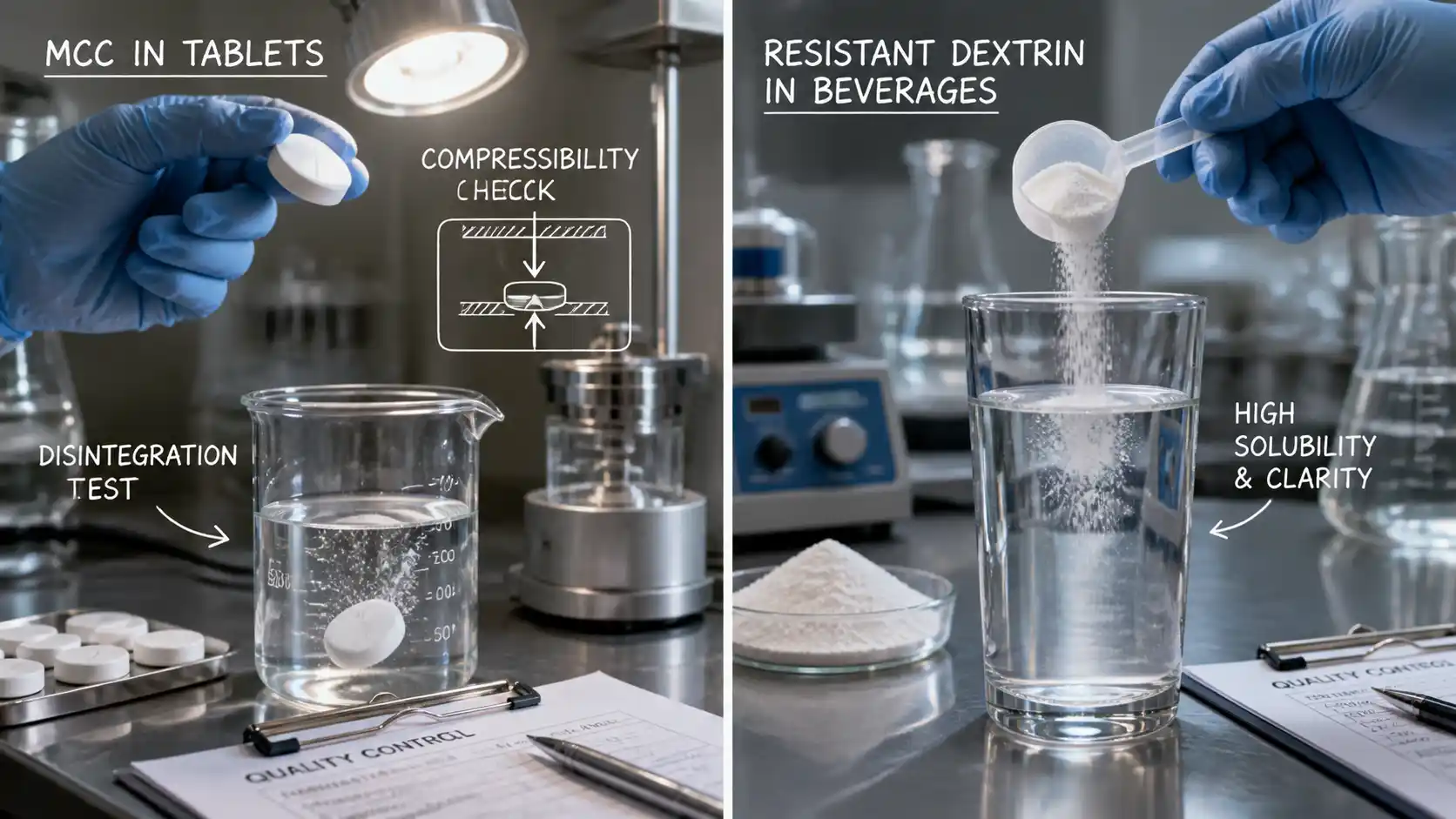
A practical sourcing approach is to qualify Chinese suppliers using two application-driven mini case studies:
- One case built around resistant dextrin performance in a beverage or powdered nutrition format.
- One case built around microcrystalline cellulose performance in a tablet (binder/disintegrant) system.
This framework keeps evaluation grounded in outcomes: clarity, mouthfeel, compressibility, disintegration, stability, and documentation readiness.
Case study A: making resistant dextrin work in low sugar beverages
For many brands, the job of resistant dextrin is simple to describe but hard to execute at scale: add fiber without adding turbidity, off-notes, or processing surprises.
What “good” looks like in formulation
A reliable bulk resistant dextrin powder typically succeeds in RTD beverages and drink mixes when it shows:
- High solubility in hot and cold water and quick dispersion
- Neutral taste (no bitterness, no strong cereal note)
- Heat and acid stability, so it survives pasteurization and acidic flavor systems
- Fiber content that matches the project brief (many buyers use ≥82% as a practical baseline depending on claim and serving size)
Shine Health (also known as Shandong Shenghuai Health Co., Ltd.) presents resistant dextrin as a soluble dietary fiber designed for these realities—water soluble, stable under heat and acid, and neutral in taste. For buyers benchmarking suppliers, it helps to compare how different factories document these traits and how they respond when asked for application support.
To see how a supplier frames beverage-ready functionality, buyers can review product positioning for resistant dextrin food ingredient and compare it with their own internal performance criteria.
Buyer actions that prevent rework
To qualify a Recommended Chinese Resistant Dextrin Manufacturer, request a small “application pack” with each sample:
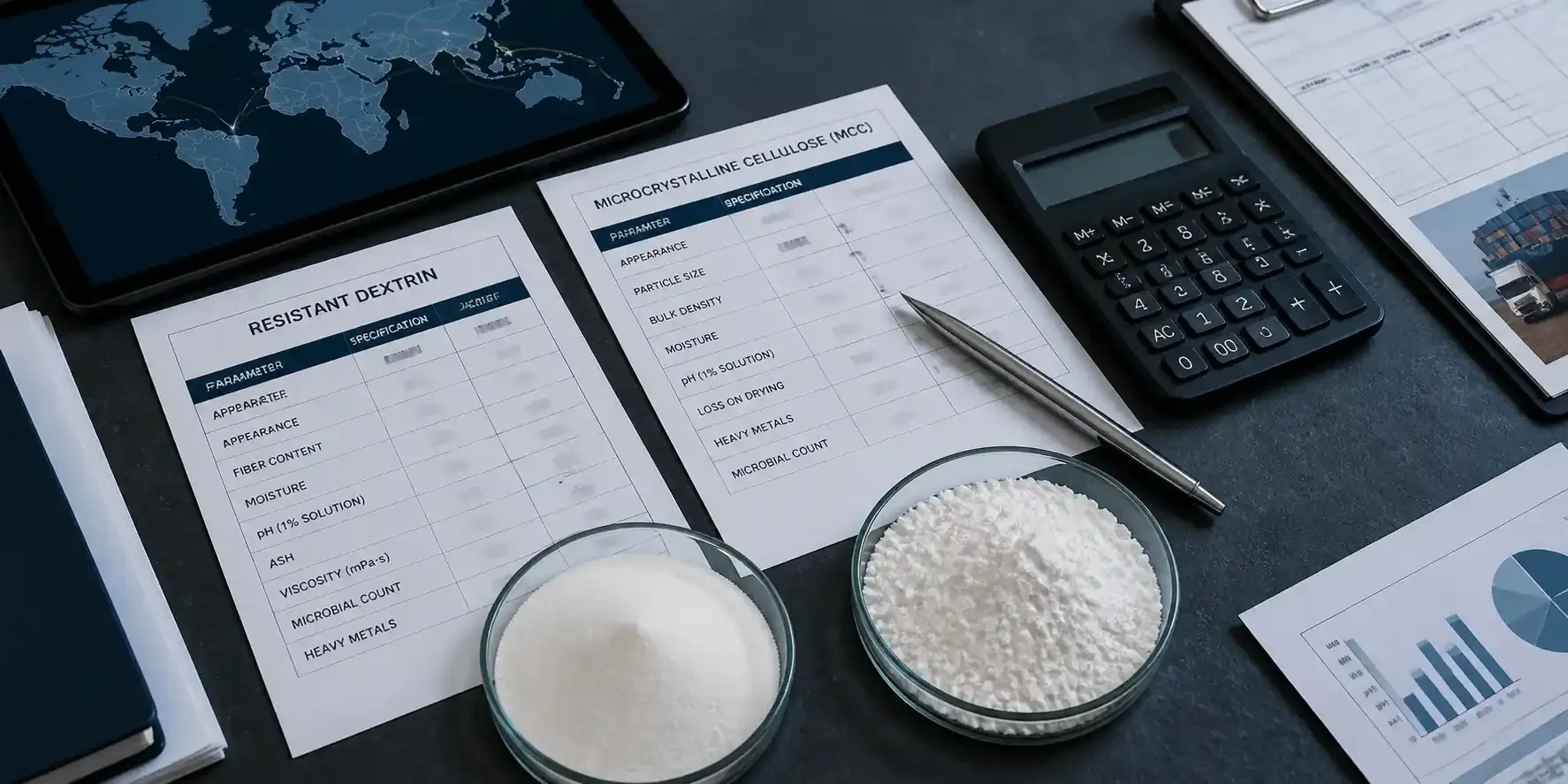
- COA with fiber content, moisture, ash, pH, and microbial limits (e.g., aerobic plate count, coliforms, yeast, mould)
- Mixing guidance (recommended shear level, temperature range)
- Stability notes (pH and thermal handling) aligned with your process
- Retain sample from the same lot used for the COA, so later claims match the tested batch
For brands building gut-health positioning, verify whether the supplier can support your concept with application guidance and documentation (without exaggerating health claims). A useful comparison point is the way gut health dextrin is described as a prebiotic fiber that reaches the colon and supports beneficial bacteria—language that stays within typical ingredient functionality narratives.
Manufacturing signals that support consistency
When resistant dextrin performance changes between pilot and scale, the cause is often process control: enzyme hydrolysis, drying consistency, and packaging moisture barriers. Recommended Chinese suppliers usually disclose the fundamentals of how they control variability—automation level, central control systems, and in-house QC lab capability.
If a supplier claims non-GMO resistant dextrin, treat it like a traceability question rather than a slogan. A credible answer connects the claim to raw material sourcing and batch records. A reference example of how raw material language can be presented is natural raw material soluble corn fiber, which emphasizes non-GMO corn starch sourcing and traceability as part of product quality expectations.
Case study B: making microcrystalline cellulose behave in tablets
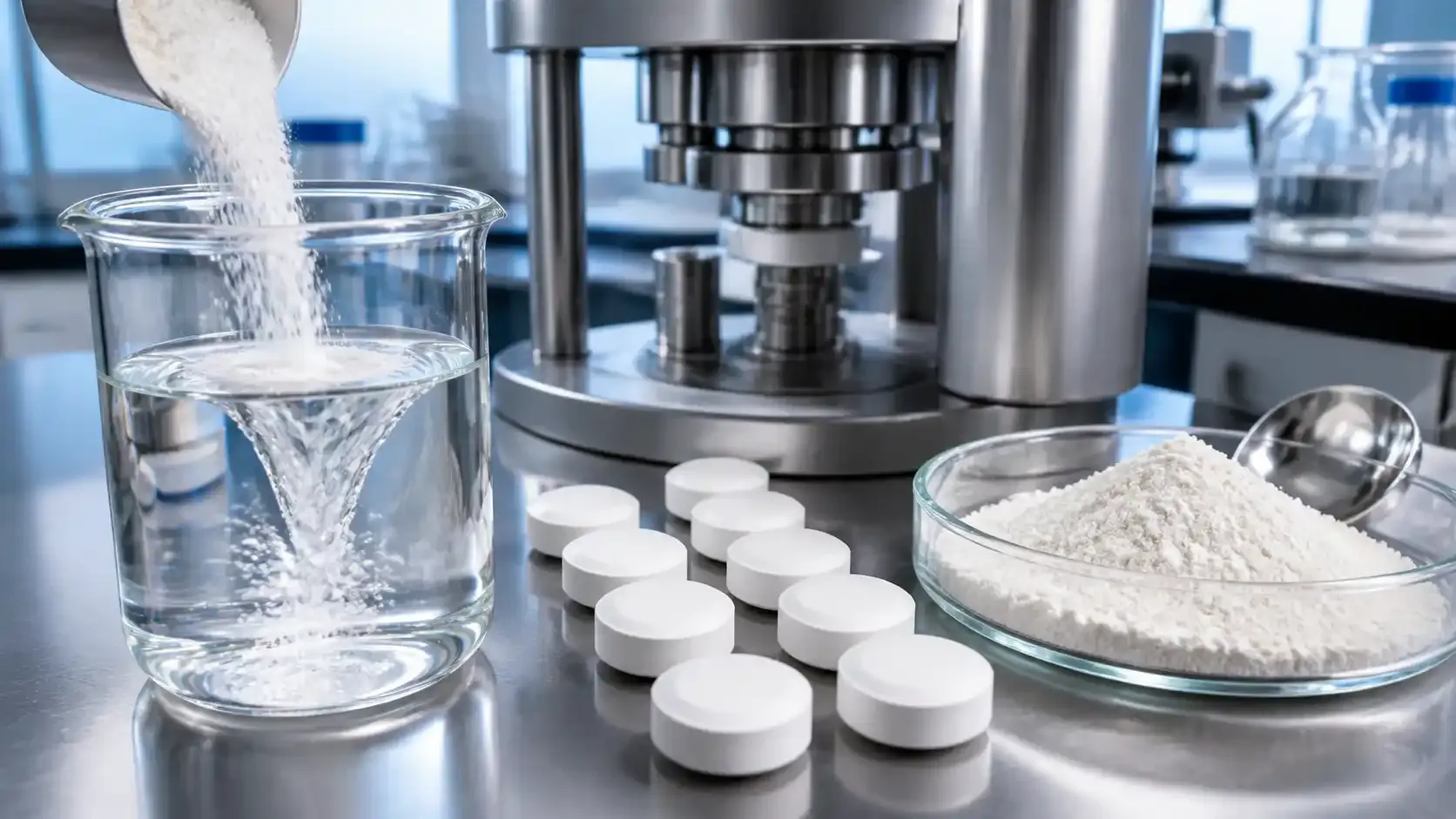
Microcrystalline cellulose is often purchased as a “standard excipient,” yet it is one of the most common sources of compressibility and disintegration surprises when a plant changes suppliers. In direct compression systems, MCC is rarely just a filler—it influences flow, hardness, friability, and disintegration time.
What to verify before approving a new MCC source
For any Recommended Chinese Microcrystalline Cellulose Manufacturer, procurement should link the purchasing spec directly to the intended use:
- MCC grade selection (e.g., PH series) aligned with your process
- Mesh/particle size distribution suitable for flow and blending
- Purity and compliance targets (commonly aligned with BP/USP/FCC/JP for broad compatibility)
- Batch-to-batch consistency supported by an in-house QC lab
Shine Health documents MCC grade ranges and common pharmacopeia standards on its MCC pages, which can be used as a benchmarking reference for how Chinese suppliers communicate specifications. Buyers comparing alternatives can start with microcrystalline cellulose wholesale and then review how another supplier’s COA structure aligns with the same parameters.
A simple, high-signal tablet trial
To reduce risk, many teams run a quick two-step trial using the same MCC sample lot:
- Blend and flow check: observe dusting, segregation tendency, and flow through hopper simulation.
- Compression and disintegration check: press a small tablet set under your typical force range and record hardness and disintegration time.
This trial does not replace full validation, but it quickly shows whether the MCC behaves as a stable binder/disintegrant in your system.
When a supplier can support this work with clear documentation and responsive technical follow-up, it is a strong indicator of a recommended supplier rather than a price-only source.
For an example of how MCC is framed as a quality-controlled excipient with broad applications, buyers can compare positioning and documentation style on high-quality microcrystalline cellulose and use it as a reference for what “transparent documentation” should look like.
A unified scorecard for MCC and resistant dextrin suppliers
Even though microcrystalline cellulose and resistant dextrin serve different functions, the supplier evaluation logic can be unified. A recommended Chinese manufacturer typically performs well across five shared dimensions.
1. Raw materials and traceability
- Resistant dextrin: non-GMO corn starch or traceable starch inputs, consistent supplier management
- MCC: sustainable wood pulp or plant-based fibers with documented origin
- Request: batch traceability records, non-GMO statements where applicable, incoming inspection standards
2. Production control and automation
- Look for evidence of controlled hydrolysis, filtration/purification, drying, and automated filling
- Ask for a process overview (not proprietary details) that explains where critical parameters are controlled
3. QC lab capability and release discipline
- In-house testing for microbiology and physicochemical parameters
- Clear COA format, stable limits, and a documented release process
4. Export readiness and documentation pack
- COA, MSDS, specification sheet, allergen statement where relevant
- Clear labeling with lot number, production date, and shelf-life information
5. Technical support and ODM practicality
Many buyers now evaluate whether a supplier can support faster launches with formulation guidance or ODM options—especially in functional foods. Shine Health describes after-sales technical support and ODM capability in its fiber pages; buyers can use that as a benchmark and request comparable support commitments from any shortlisted factory.
How to shortlist recommended Chinese manufacturers without overbuying on paper
A recommended supplier is not necessarily the one with the longest certificate list; it is the one whose evidence matches your risk profile.
A practical shortlisting sequence:
- Step 1: Compare COAs across three lots (ask the supplier for historical COAs) for both resistant dextrin and microcrystalline cellulose.
- Step 2: Run the two application checks above—one beverage-focused for resistant dextrin and one tablet-focused for MCC.
- Step 3: Validate packaging suitability for your logistics (moisture-proof liners matter for both ingredients).
- Step 4: Place a small commercial trial order and hold a retain sample.
For procurement teams that want a reference point for how a Chinese manufacturer organizes product documentation and application narratives, Shine Health’s site can serve as a practical starting benchmark. Relevant pages include resistant dextrin and microcrystalline cellulose categories under www.sdshinehealth.com.
Conclusion
Sourcing from China remains a strong option for both resistant dextrin and microcrystalline cellulose, but the winning approach is to qualify suppliers through application performance and documentation discipline. When a supplier can prove stable resistant dextrin behavior in low sugar systems and stable microcrystalline cellulose behavior in tablets—supported by traceability, QC, and export-ready files—it earns the “recommended” label in a way that holds up after scale.
For buyers who want curated introductions to vetted Chinese manufacturers of microcrystalline cellulose and resistant dextrin, it can be helpful to consult independent sourcing experts or industry platforms that benchmark suppliers against these application and documentation criteria—for example, the supplier resources available via www.sdshinehealth.com.
Further reading and context for buyers
- Precedence Research pharmaceutical excipients market overview (market sizing range and growth drivers referenced)
- FoodNavigator report on fiber demand and gut health trend
- Shine Health product and specification pages used as supplier documentation examples:
- Microcrystalline cellulose wholesale
- High-quality microcrystalline cellulose
- Resistant dextrin food ingredient
- Factory supply resistant dextrin
- Natural raw material soluble corn fiber
- Gut health dextrin