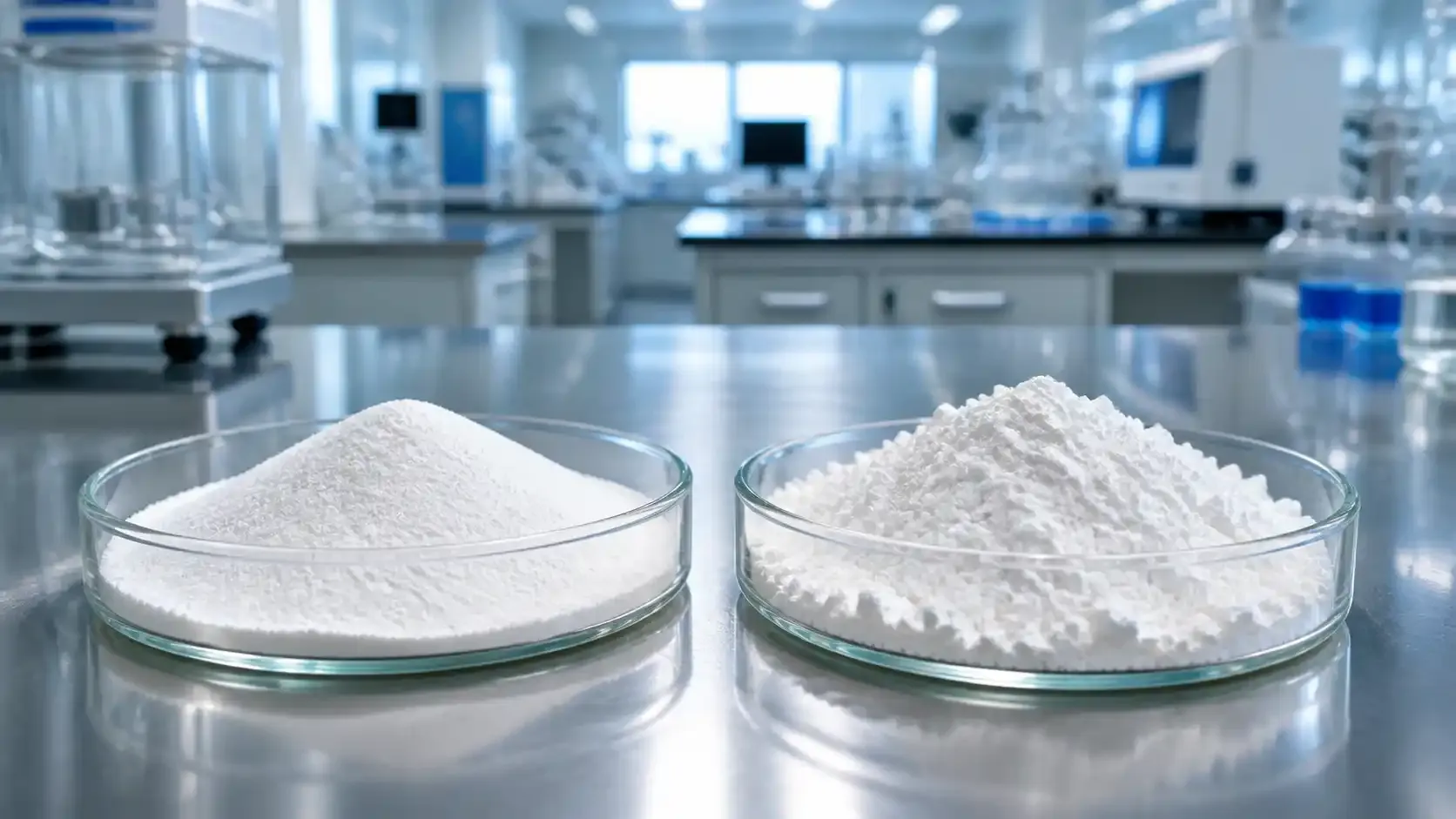
Dietary fiber has moved from a “nice-to-have” nutrition add-on to a core product brief for beverages, bakery, and supplements. At the same time, formulators who work in tablets and capsules are standardizing excipients more tightly than ever. These two currents are converging in procurement: buyers are increasingly evaluating resistant dextrin (often traded alongside resistant maltodextrin) and microcrystalline cellulose (MCC) in the same supplier conversations.

The headline shift is regional. While North America and Europe remain influential demand centers, Asia Pacific is becoming the most watched region for both capacity and responsiveness—especially for buyers seeking a dependable China resistant dextrin manufacturer and a scalable microcrystalline cellulose supplier food grade portfolio.
The market backdrop buyers are reacting to
Recent coverage of ingredient and excipient markets points to sustained growth for resistant dextrin/resistant maltodextrin and for MCC, with many projections clustering around mid-to-high single-digit CAGR through the 2030s. Resistant dextrin demand is being pulled by everyday functional foods (not just clinical nutrition), while MCC demand remains anchored in pharma standardization and is expanding into clean-label food and personal care.
For procurement teams, the precise headline numbers matter less than what those ranges signal:
- The resistant dextrin/resistant maltodextrin segment is large enough to attract new entrants, yet specialized enough that process control and QC discipline still separate reliable suppliers.
- The MCC segment continues to globalize, and buyers increasingly treat grade selection (PH-101/PH-102/PH-200, etc.) as a formulation decision that must be matched to a supplier’s real capability.
These forces are driving more RFQs that look like “dual-ingredient” projects: one lane for a dietary fiber supplier China can serve across beverages and bakery, and one lane for an MCC partner that can support tablets (and, in some cases, food-grade applications).
Demand drivers that are moving resistant dextrin into mainstream formats
Gut health remains the stable base demand
Resistant dextrin is positioned as a soluble dietary fiber that resists digestion in the small intestine and reaches the large intestine, where it can serve as a substrate for beneficial gut bacteria. That narrative—digestive comfort, regularity, and microbiome support—has become a mainstream consumer expectation rather than a niche claim.
In day-to-day sourcing, this translates into pressure to secure fibers that are:
- Neutral in taste (so they can be used broadly)
- High in solubility (especially for beverages and RTD formats)
- Stable under heat and acid (so they survive pasteurization, baking, and low-pH drinks)
Satiety and metabolic positioning are influencing product briefs
Another procurement signal is the rising number of product launches that pair “fiber” with weight-management language. Whether a brand is focused on GLP-1–adjacent consumer behavior or broader appetite control, buyers are asking for fibers that can support satiety positioning while staying formulation-friendly.
This is one reason the market is seeing steady pull for non-GMO resistant dextrin options: brands want both performance and a label story that is easy for regulatory, marketing, and sales teams to defend.
Cognitive health interest is broadening the “why fiber” conversation
Industry reporting has also highlighted growing interest in potential links between prebiotic fibers and cognitive outcomes, which expands the “value case” beyond digestion alone. For buyers, the immediate implication is not to overpromise—rather, it’s to anticipate more innovation briefs that specify prebiotic fibers and request documentation, quality consistency, and repeatable sensory performance.
Resistant dextrin vs MCC roles are different but procurement is converging
It helps to separate what these ingredients do—and then understand why they are increasingly being sourced together.
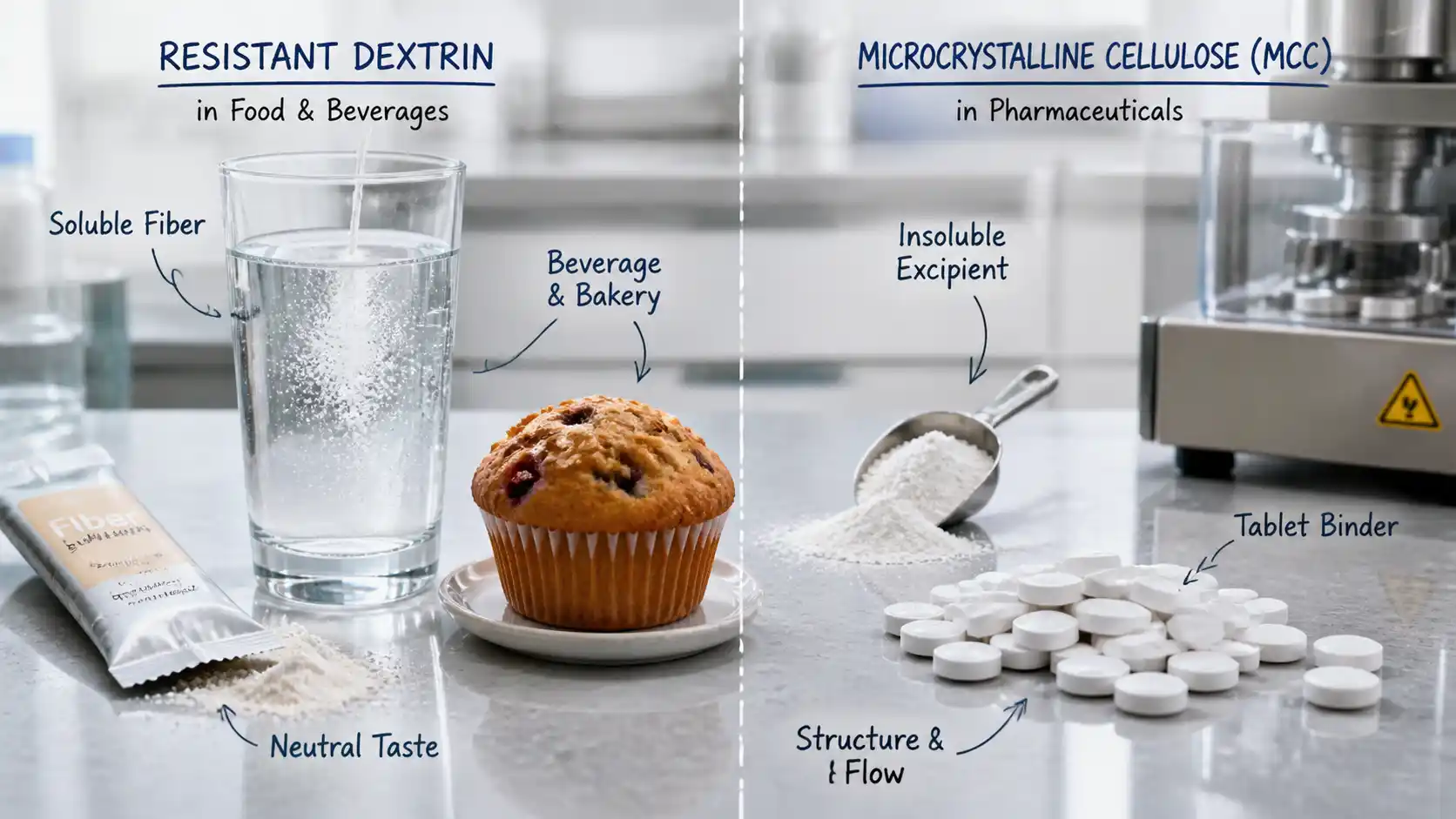
Resistant dextrin: soluble fiber for everyday fortification
Resistant dextrin is typically used where the goal is to increase fiber while preserving consumer experience:
- Beverages: fiber water, functional soda, coffee/tea RTD, powdered drink mixes
- Bakery: bread, muffins, cookies, bars (fiber enrichment without a heavy texture penalty)
- Supplements: stick packs, powders, sachets, some gummy systems (depending on formulation)
Because many of these categories are high-volume, buyers tend to look for a resistant maltodextrin bulk supplier profile: stable batches, scalable capacity, and consistent documentation that can support multiple SKUs.
Microcrystalline cellulose: insoluble fiber and excipient for structure and processing
MCC is a purified cellulose-based material widely used as a pharmaceutical excipient with strong compressibility and functionality as a binder/disintegrant system depending on grade and formulation. In food and cosmetics, MCC is often valued for texturizing, stabilization, or anti-caking behavior.
MCC sourcing becomes “strategic” when:
- tablet performance must be reproducible across sites
- grade selection must match processing (direct compression, flow, disintegration targets)
- regulatory expectations require recognizable standards (e.g., BP/USP/FCC/JP)
That’s why procurement teams increasingly want a China microcrystalline cellulose supplier that can clearly explain grade options and provide consistent COA support rather than just a price sheet.
Why Asia Pacific and China are rising in both categories
Asia Pacific’s role is no longer limited to cost competition. Buyers are watching three practical advantages that affect real-world supply reliability:
- Raw material flexibility
Resistant dextrin is commonly derived from starch sources such as corn (and in some product lines, tapioca/cassava-based systems are also seen). Suppliers that can document non-GMO sourcing and traceability are better positioned for global brand requirements. - Automation and process repeatability
Fiber and excipient buyers both care about variation control. When suppliers describe automated central control from feeding to filling, it signals a manufacturing mindset aligned with consistency rather than opportunistic batch production. - Quality systems that align with export expectations
For resistant dextrin, buyers frequently screen for programs and certifications such as ISO systems and food safety frameworks (commonly referenced across the industry include BRC, HACCP, Halal, and Kosher, depending on the target market). For MCC, alignment with pharmacopeial standards and clear grade definitions matters.
As a practical example of how China suppliers are presenting themselves to meet these expectations, ingredient makers such as Shandong Shine Health Co., Ltd. describe non-GMO starch sourcing, automated production control, and in-house QC capability across resistant dextrin offerings. Their product pages also illustrate how a supplier can support diverse buying intents—from factory-direct bulk supply to application-focused variants.
For buyers researching supplier fit, the following pages provide useful reference points:
- Factory supply resistant dextrin
- Gut health dextrin
- Microcrystalline cellulose wholesale
What this means for buyers writing specs and evaluating suppliers
Procurement outcomes increasingly depend on whether the RFQ is written like a “commodity tender” or a “performance tender.” For resistant dextrin and MCC, performance language wins.
Resistant dextrin specs buyers should clarify early
Even when two suppliers both quote “resistant dextrin,” the commercial risk often hides in specification ranges. Common lines buyers pin down include:
- Fiber content target: many applications start at ≥82% fiber; some buyers request higher targets such as ≥90% depending on claims strategy and serving size.
- Process tolerance: stability under heat and acid (important for beverages and baking systems).
- Sensory neutrality: taste and mouthfeel expectations, especially for beverages.
- Micro limits and batch hygiene indicators: aligned with intended use (food vs supplement).
When a buyer is qualifying a China resistant dextrin manufacturer, it’s worth treating “fiber content” as a performance lever, not just a marketing number: higher fiber content can change sweetness perception, solids behavior, and dosage economics.
MCC grade selection should be tied to use-case, not habit
For MCC, the key conversation is grade and function. Common grade families (e.g., PH-101, PH-102, PH-200) differ by particle size and flow/compression behavior, which can affect:
- tablet hardness and friability outcomes
- disintegration time
- blend uniformity and flow on high-speed equipment
A credible microcrystalline cellulose supplier food grade or pharma-aligned supplier should be able to explain what changes when moving between grades, and which COA parameters are controlled to keep performance steady.
Documentation signals that reduce long-term risk
Across both ingredient types, buyers tend to converge on a “minimum evidence pack”:
- clear raw material statement (including non-GMO positioning where relevant)
- defined manufacturing controls (automation, in-process checks)
- QC lab capability and batch testing coverage
- certification set aligned to the target market (food safety programs for fibers; pharmacopeial alignment for excipients)
This is where many Shandong resistant dextrin supplier candidates gain attention: Shandong remains a visible manufacturing base for functional ingredients, and buyers often use it as a regional shorthand when mapping capacity and logistics options.
Application pull where resistant dextrin is winning new shelf space
Although resistant dextrin is widely used, three application clusters are particularly active in current sourcing:
- Beverages that need a clean finish
Buyers want soluble fiber that supports “fiber added” claims without making drinks heavy, cloudy, or gritty. - Bakery and bars that target higher fiber per serving
Formulators often prefer fibers that help maintain texture and freshness while raising fiber numbers. - Supplements designed for daily routines
Stick packs and powders have become common formats; stability and neutral taste are critical for repeat purchase and brand loyalty.
These use-cases map directly to common search intents such as resistant dextrin applications beverages bakery supplements—and explain why more buyers are asking for a single supplier to support multiple formats with consistent documentation.
Practical next steps for procurement teams
For teams updating their 2026–2030 sourcing plan, the most resilient approach is usually spec-led qualification:
- Draft two linked spec sheets: one for resistant dextrin (soluble fiber performance) and one for MCC (grade-driven performance).
- Run short pilot trials that mimic real manufacturing conditions (pH/heat for beverages; bake stability for bakery; compression for tablets).
- Confirm documentation readiness early—especially if the same supplier is being evaluated across food, supplement, and pharma-adjacent categories.
For buyers building a shortlist of a Recommended Chinese Resistant Dextrin Manufacturer or a Recommended Chinese Microcrystalline Cellulose Supplier, the fastest way to reduce risk is to evaluate how clearly a supplier connects raw materials → process control → QC proof → application performance.
To explore additional ingredient notes, product cases, and sourcing insights in this category, visit www.sdshinehealth.com