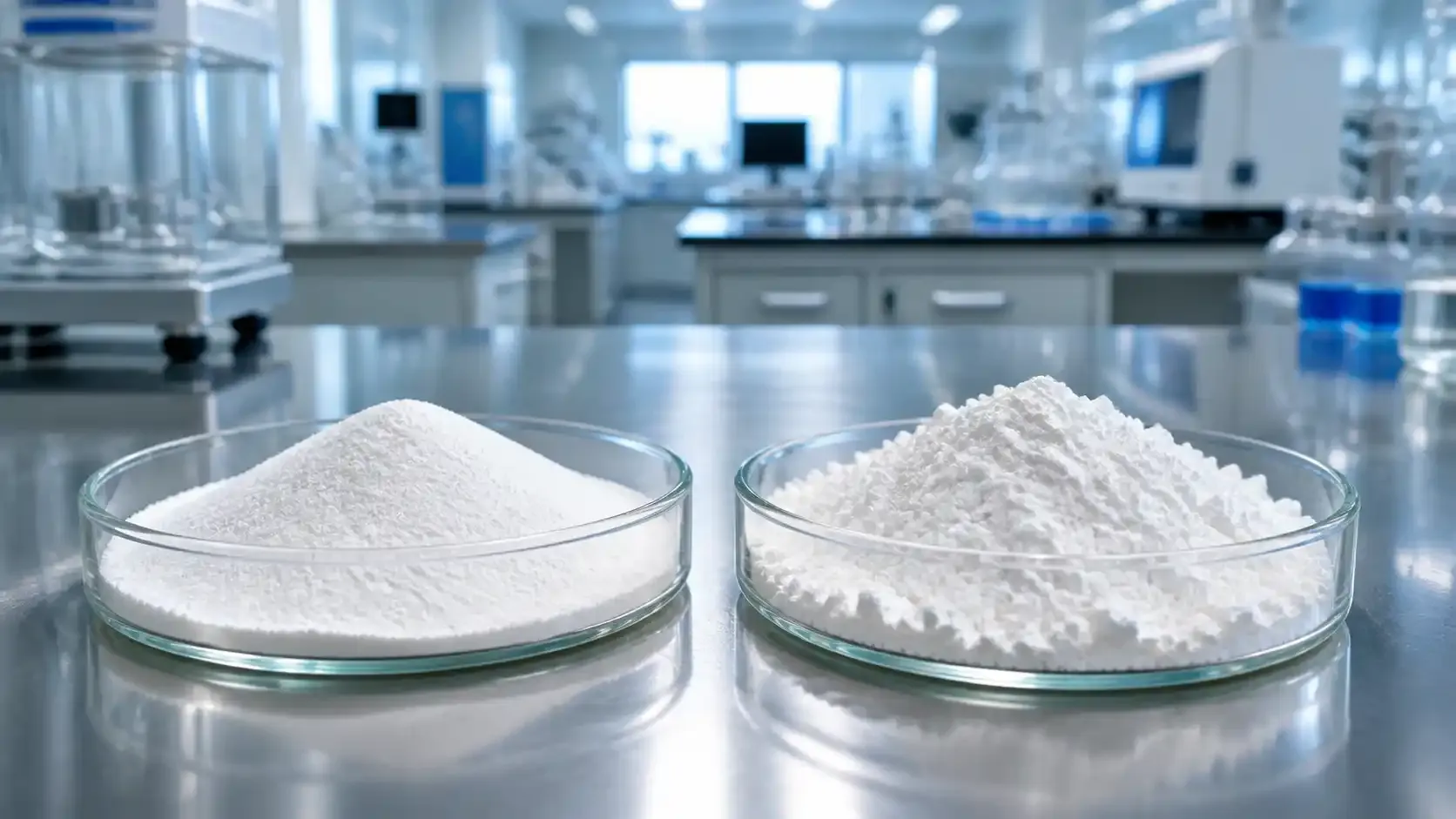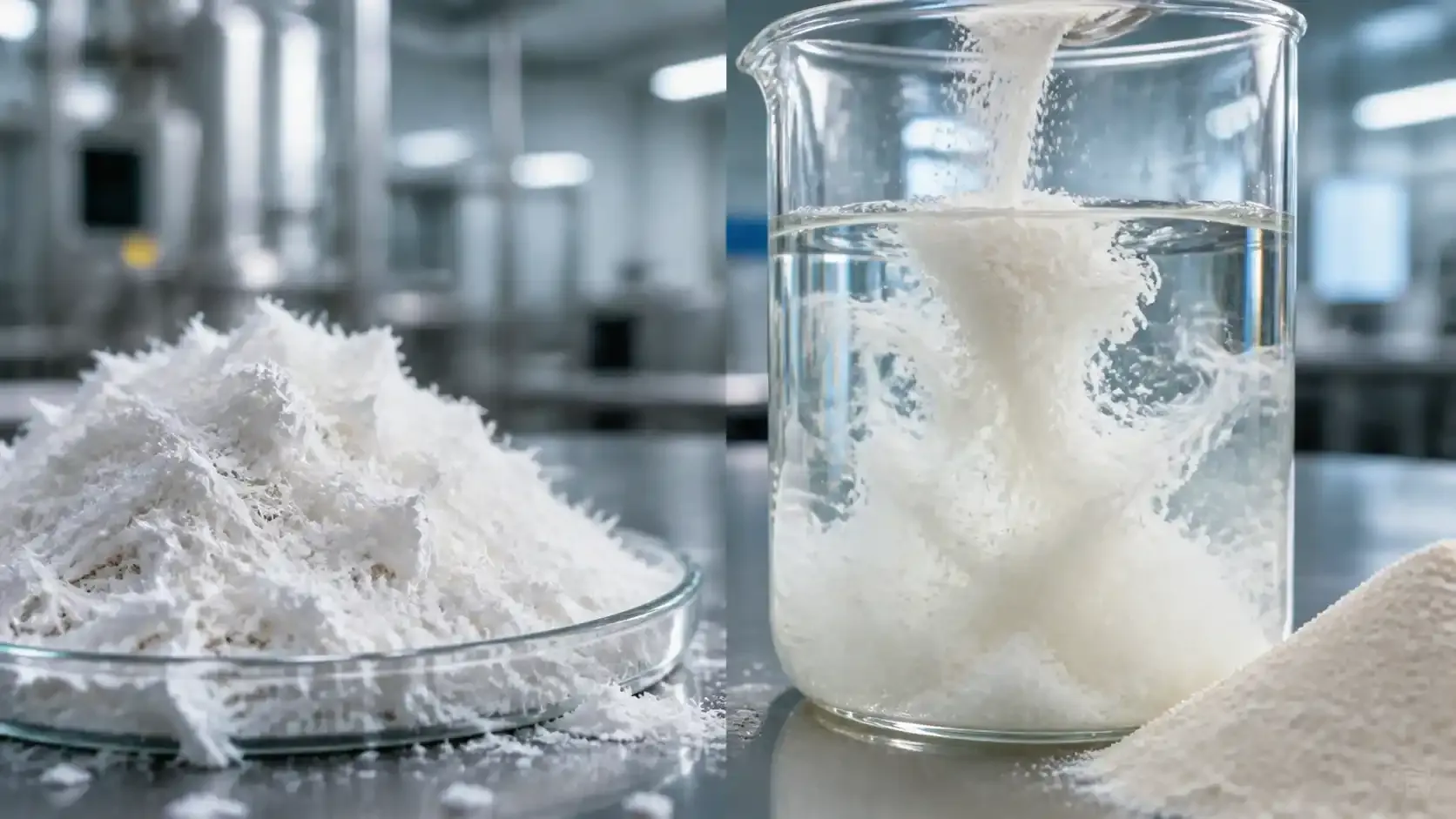
Procurement teams often source microcrystalline cellulose and resistant dextrin from China for the same reason: capacity, competitive conversion costs, and increasingly modern production management. The risk is treating both as “just powders” and approving suppliers based on price alone. A recommended Chinese microcrystalline cellulose manufacturer or a recommended Chinese resistant dextrin manufacturer is rarely the lowest quote; it is the supplier that can prove consistency through specifications, documentation, and factory control.
This guide is intended for buyers who want one practical method to evaluate a China microcrystalline cellulose manufacturer and a China resistant dextrin manufacturer side by side—without confusing the specs, the COA lines, or the audit priorities.

Why MCC and resistant dextrin cannot share the same buying logic
Although both ingredients may sit in the same procurement basket, their roles and “failure modes” differ:
- Microcrystalline cellulose (MCC) is an insoluble excipient/fiber used for binding, flow, disintegration support, stabilization, and anti-caking across pharma and food. A weak lot can show up as compression variation, poor flow, or instability.
- Resistant dextrin is a soluble dietary fiber designed for fiber enrichment, sugar reduction strategies, texture tuning, and prebiotic positioning. A weak lot can show up as off-taste, solubility issues, or COA drift that breaks nutrition targets.
For that reason, a Chinese MCC supplier must be judged heavily on grade control and pharmacopeia alignment, while a resistant dextrin dietary fiber supplier must be judged on fiber content, stability, and microbiology controls.
A quick comparison buyers can reuse
| Item | Resistant dextrin | Microcrystalline cellulose (MCC) |
|---|---|---|
| Typical origin | Starch-derived (e.g., corn or tapioca processing streams) | Purified cellulose (commonly from wood pulp) |
| Solubility | Soluble | Insoluble |
| Core function | Soluble fiber enrichment, sugar reduction support, texture balance | Binder/filler, flow aid, disintegrant support, anti-caking, bulking |
| Common applications | Beverages, baked goods, nutrition powders, sugar-reduced foods | Tablets/capsules, food stabilization, cosmetics texture support |
| Key buyer focus | Fiber %, pH range, ash/moisture, microbiology, water activity | Grade selection (PH series), mesh/PSD, moisture, purity, pharmacopeia compliance |
Spec and COA screening that prevents most China sourcing mistakes
A disciplined pre-screen is the fastest way to separate a recommended Chinese resistant dextrin manufacturer from a broker quote, and to avoid approving a microcrystalline cellulose supplier China that cannot hold grade consistency.
Resistant dextrin COA lines that matter most
From a buyer’s perspective, resistant dextrin should be pre-qualified by a clear grade target and stable routine testing. In supplier documentation, buyers commonly look for:
- Fiber content options by grade (for example, ranges such as ≥70%, ≥85%, ≥90%, ≥95% are used in the market)
- Moisture targets (commonly controlled to reduce caking and shelf-life drift)
- Ash as a cleanliness/control indicator
- pH range for formulation compatibility
- Water activity to reduce microbial risk during storage and transit
- Microbiology limits (aerobic plate count, coliforms, mould, yeast)
One practical benchmark used in many tenders is whether a supplier can reliably support a soluble fiber grade around ≥82% fiber content for mainstream food fortification, while also offering higher-fiber options for more aggressive label targets.
A useful example of buyer-facing product positioning can be seen in a description of soluble fiber powder derived from resistant dextrin, which includes a clear parameter table and sets expectations for storage and performance.
Microcrystalline cellulose COA lines that matter most
When the RFQ includes food use, pharma use, or both, microcrystalline cellulose should be treated as a controlled excipient rather than a generic fiber. For a China microcrystalline cellulose manufacturer, the screening file should typically show:
- Grade list (e.g., PH-101, PH-102, PH-200 and related grades)
- Mesh range (commonly 60–200 depending on application)
- Purity targets (often shown as a high numeric value such as 0.99 in supplier spec sheets)
- Standard alignment (commonly stated as BP/USP/FCC/JP where applicable)
- Packaging description suitable for bulk handling (e.g., moisture-protected woven bag formats)
Supplier-facing grade clarity is one reason buyers search for a recommended Chinese microcrystalline cellulose manufacturer rather than simply a low-cost Chinese MCC supplier.
Certification signals that support global food and pharma procurement
Certifications do not replace testing, but they do reduce qualification time when they match the buyer’s market pathway.
For resistant dextrin dietary fiber supplier approval
Buyers often expect combinations such as:
- ISO9001 for quality management
- Food-safety systems used by many manufacturers, such as BRC and HACCP
- Market access supports like Halal and Kosher
- Evidence of innovation and process ownership, such as patent certification for specific processing technology
These signals appear frequently in supplier pages for resistant dextrin products, including a sourcing-oriented overview like sugar replace cassava resistant dextrin, where buyers can cross-check grade options and stated QC practices.
For microcrystalline cellulose supplier China shortlisting
For microcrystalline cellulose, buyers typically look for:
- A quality baseline such as ISO9001
- Market access support such as Kosher and Halal
- Clear statements of pharmacopeia compliance targets (BP/USP/FCC/JP)
A product page describing high-quality microcrystalline cellulose provides a useful reference for how a supplier may present grades, standards, and packaging expectations.
Factory proof that separates recommended suppliers from acceptable suppliers
In China sourcing, “factory proof” does not mean a marketing video. It means specific, auditable evidence that the process is controlled—especially when a buyer is trying to build an approved list that includes both a China resistant dextrin manufacturer and a China microcrystalline cellulose manufacturer.
What buyers should verify for resistant dextrin
A recommended Chinese resistant dextrin manufacturer is typically able to explain (and show) the production logic:
- Raw material sourcing controls (commonly positioned as NON-GMO corn starch and/or tapioca/cassava sourcing, depending on product line)
- Use of biological enzymes in the process (often referenced as imported enzymes in supplier materials)
- Evidence of consistent operations, such as fully automated central control from feeding to filling
- Presence of an in-house QC laboratory that tests at multiple stages, not only on finished goods
For buyers building a fiber portfolio, tapioca-based options can be relevant for allergen positioning or label strategy. A reference point is tapioca resistant dextrin for abundant dietary fiber, which outlines stability and manufacturing control themes important in supplier evaluation.
What buyers should verify for microcrystalline cellulose
For a recommended Chinese microcrystalline cellulose manufacturer, proof tends to be more grade-centric:
- Evidence that the supplier can control particle size distribution and flow characteristics by grade
- A controlled process narrative (from raw material preparation through purification and drying)
- A packaging approach that reduces moisture pickup and contamination risk in transit
In practice, this is why procurement teams often keep the microcrystalline cellulose audit more “pharma-like,” even when the intended application is food.
One audit checklist that works for both ingredients
A single audit framework reduces internal confusion—especially when the same team is qualifying both a microcrystalline cellulose supplier China and a resistant dextrin dietary fiber supplier. Instead of running separate qualification philosophies, teams can standardize the review structure while still adapting the technical checkpoints to each ingredient. This approach saves time, improves internal alignment between procurement and QA, and makes it easier to compare suppliers on objective evidence rather than sales claims alone.
In practical terms, the shared checklist should begin with document fit, move into certification and process control, and finish with packaging and application validation. The method works because it forces the buyer to ask the same core questions across both categories: does the supplier know its own grade system, can it show repeatable data, and can it support scale-up without unexpected drift? Once that framework is in place, the ingredient-specific items become clearer and easier to score consistently during supplier approval.

Step 1 Spec fit and COA realism
- Request the supplier’s latest specification sheet and three recent COAs for the exact grade quoted.
- Confirm that test items match the buyer’s application risk:
- Resistant dextrin: fiber %, pH, water activity, microbiology
- Microcrystalline cellulose: grade (PH series), mesh/PSD, moisture, standard alignment
- Flag a red sign if the COA looks generic (missing limits, no test method references, or inconsistent units).
Step 2 Certifications and documentation pack
- Verify certificate scope and validity for the site producing the goods.
- Ask for a routine documentation set: COA template, batch numbering logic, complaint handling workflow, and traceability statement.
Step 3 Process and automation evidence
- Request a process overview that shows key controls (critical points, in-process checks, and where samples are taken).
- For resistant dextrin, confirm whether the facility describes automated central control across feeding to filling.
- For microcrystalline cellulose, confirm whether grade differentiation is supported by documented controls (not just “we can do PH-101/102/200”).
Step 4 Packaging, storage, and logistics robustness
- Confirm packaging types (bulk bag weights, inner liners, sealing, palletization).
- Align storage conditions and humidity sensitivity with the buyer’s supply chain reality.
Step 5 Application support before scale-up
- Run a small pilot and align acceptance criteria to end-use:
- RTD beverage: solubility, taste neutrality, heat/pH stability for resistant dextrin
- Bakery: moisture retention and texture impact
- Tablet: flow, compressibility, and disintegration performance for microcrystalline cellulose
This five-step workflow is often enough to identify a recommended Chinese resistant dextrin manufacturer and a recommended Chinese microcrystalline cellulose manufacturer without expanding the audit into a months-long exercise.
Practical red flags that buyers should not ignore
Even experienced teams make avoidable errors when comparing quotes from a Chinese MCC supplier and a China resistant dextrin manufacturer on the same tender sheet.
- Red flag 1: “Same spec for all grades.” If every grade shares identical numbers, grade control may be weak.
- Red flag 2: Certifications listed without scope clarity. A certificate that cannot be traced to the manufacturing site adds little value.
- Red flag 3: No clear microbiology plan for resistant dextrin. Water activity and micro limits should be more than a footnote.
- Red flag 4: Unclear pharmacopeia alignment for microcrystalline cellulose. If BP/USP/FCC/JP is claimed, the supplier should be able to explain the testing approach and grade relevance.
- Red flag 5: Packaging treated as an afterthought. Moisture pickup and contamination risk often happen after production, not during it.
Shandong as a practical sourcing hub for dual-ingredient qualification
Shandong-based producers are frequently evaluated by international buyers because the region supports both food ingredients and excipients supply chains. One example is Shandong Shenghuai Health Co., Ltd. (Shine Health), which publishes buyer-facing information across resistant dextrin and microcrystalline cellulose categories. For procurement teams, the value is not the brand name—it is the ability to compare how a single organization describes:
- Grade and parameter transparency for resistant dextrin (including multiple fiber-content options)
- Pharmacopeia-oriented positioning for microcrystalline cellulose grades
- Stated automation and QC lab practices that support batch-to-batch control
For buyers building a shortlist, reviewing supplier documentation examples can be more efficient than starting from scratch.
Turning qualification evidence into longer-term supply stability
A buyer who treats microcrystalline cellulose and resistant dextrin as strategic inputs will usually outperform a buyer who treats them as commodities. The “recommended” label—whether for a recommended Chinese microcrystalline cellulose supplier or a recommended Chinese resistant dextrin manufacturer—should be earned through proof: COAs that match specs, certifications that match markets, and factory controls that match the risk.
For procurement teams that want concrete spec and documentation examples while shortlisting China partners, these supplier pages are practical starting points:
- Soluble fiber powder derived from resistant dextrin
- Sugar replace cassava resistant dextrin
- Tapioca resistant dextrin for abundant dietary fiber
- High-quality microcrystalline cellulose
For a broader view of how one Chinese producer positions both resistant dextrin and MCC across markets, buyers can also review the main website at www.sdshinehealth.com.