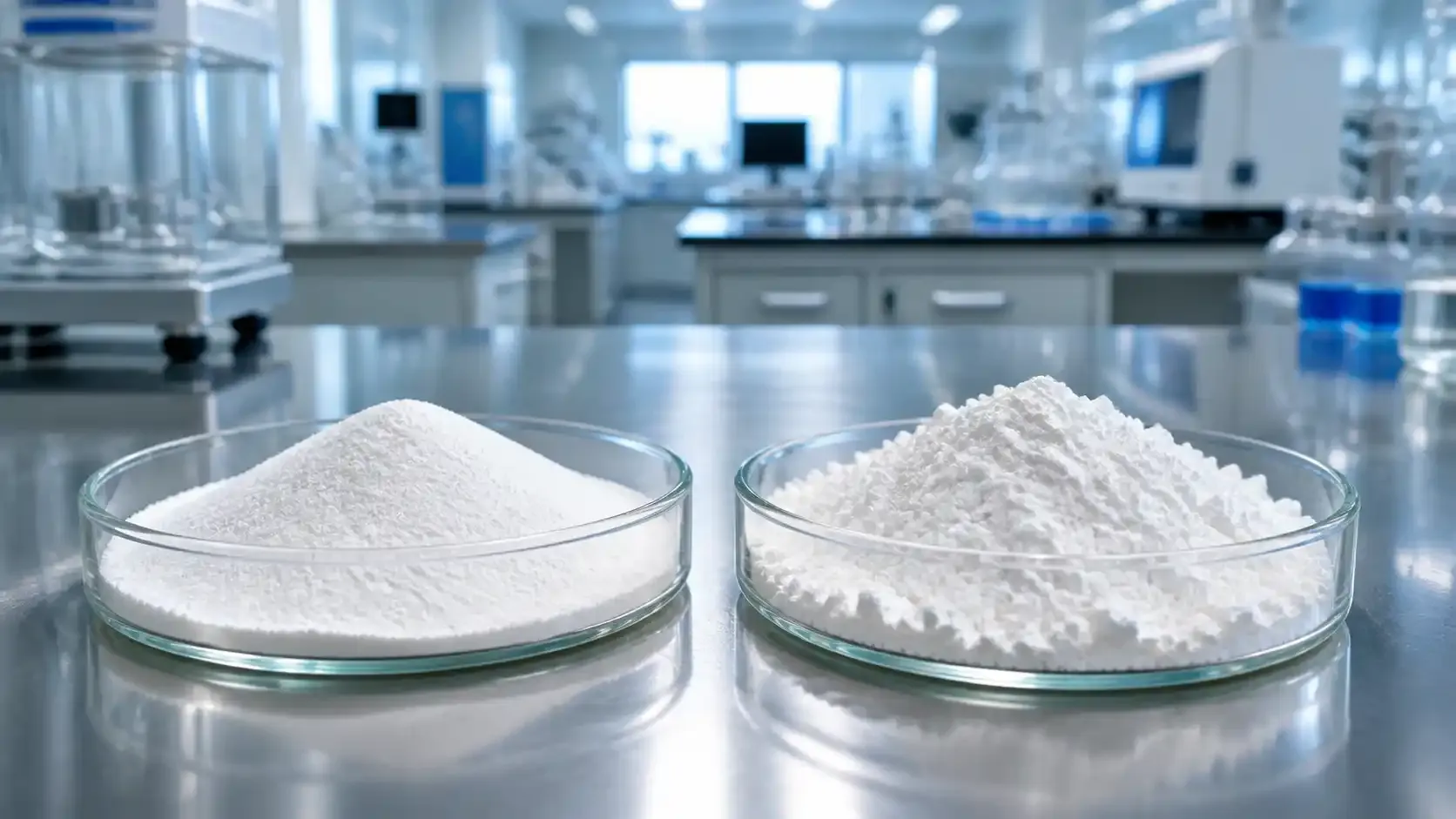
Global demand is lifting expectations for both microcrystalline cellulose (MCC) and resistant dextrin. For buyers, the opportunity is real—China can be a competitive origin for pharma-grade excipients and formulation-friendly dietary fiber—but the risk is equally real: inconsistent documentation, unclear specifications, or weak process control can turn a “good quote” into reformulation work and delayed launches.
This guide explains how procurement teams can validate a microcrystalline cellulose supplier China offers at the right quality level, and how to qualify a resistant dextrin manufacturer China buyers can rely on for high-fiber claims and stable performance. The focus is practical: what to ask for, what to verify, and what “recommended” should mean when you shortlist a China microcrystalline cellulose manufacturer or a Recommended Chinese Resistant Dextrin Manufacturer.

Market signals that are reshaping MCC and fiber sourcing
Two demand streams are tightening supplier expectations at the same time:
- Pharmaceutical excipients are growing faster than many buyers forecasted. MCC remains a workhorse excipient in solid oral dosage forms because it supports compressibility, flow, and robust tablet manufacturing.
- Fiber is becoming a hero ingredient in food and supplements. Resistant dextrin (also marketed as resistant maltodextrin in some portfolios) is being adopted because it can add fiber without the gritty mouthfeel or flavor penalty associated with some fibers.
- China’s pharma ecosystem is moving up the value chain. For excipients, this shift matters: buyers increasingly expect monograph alignment, tighter lot-to-lot consistency, and audit-ready records from any China microcrystalline cellulose manufacturer.
For sourcing teams, the implication is simple: supplier screening is no longer only about capacity and price. It is increasingly about evidence—specs, certifications, QC capability, and process discipline.
Procurement checklist (shortlisting stage):
- Confirm whether the plant targets pharma, food, or multi-grade production (risk profile differs)
- Ask for a current specification sheet and a recent COA (not a template)
- Verify which standards are claimed (for MCC: BP/USP/FCC/JP)
- For resistant dextrin, define your fiber target up front (many fiber-forward SKUs require ≥82% fiber)
Microcrystalline cellulose basics buyers should pin down early
MCC looks straightforward on paper—white or almost white powder, odorless and tasteless—but performance can shift meaningfully with grade, particle size distribution, and moisture control. A microcrystalline cellulose supplier China procurement teams approve should be able to explain why a grade matches your process, not just list it.
MCC grades and why they matter in qualification
A typical China microcrystalline cellulose manufacturer may offer multiple grades such as PH-101, PH-102, PH-103, PH-105, PH-112, PH-113, PH-200, PH-301, PH-302. These grades often differ in particle size and functional behavior during compression.
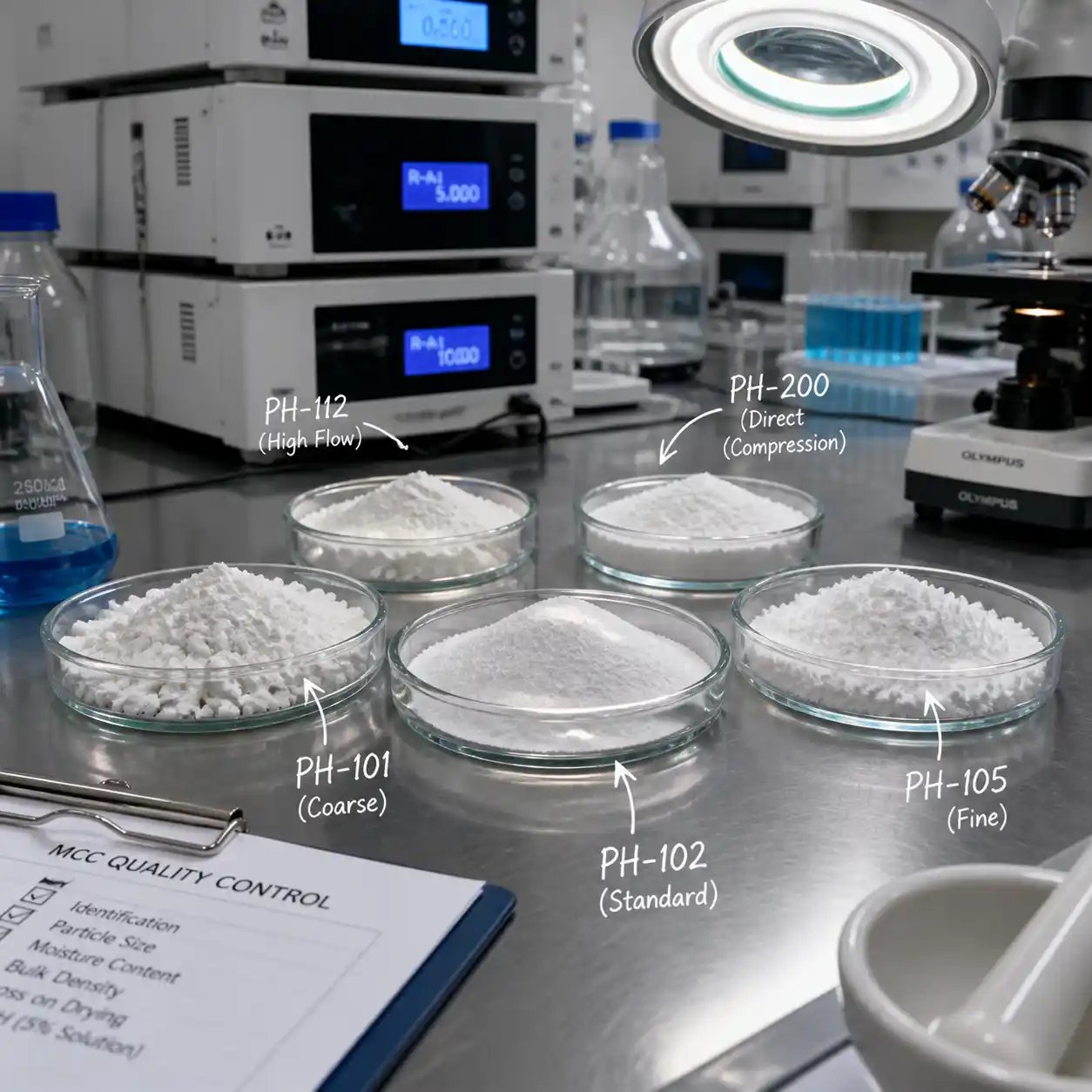
Buyers should also call out the standards that matter for their route-to-market. For many global programs, MCC is evaluated against BP/USP/FCC/JP expectations.
MCC documentation that reduces rework later
A “recommended” supplier should be able to provide consistent documentation across lots:
- Specifications aligned with BP/USP/FCC/JP where applicable
- COA with test results (not only pass/fail)
- Clear packaging description (e.g., bulk supply in 20 kg woven bags or agreed alternatives)
- Traceability essentials: lot number logic, production date, retention sample practice
If you need a benchmark for what a well-structured product file can look like, review a representative profile of high-quality microcrystalline cellulose and compare it against your existing approved-vendor requirements.
Weak vs strong MCC suppliers in practice
| Evaluation point | Weak supplier signals | Strong supplier signals |
|---|---|---|
| Standards | Vague “pharma grade” claim | Clear BP/USP/FCC/JP scope and version control |
| Grade fit | Pushes one grade for all uses | Explains why PH-101 vs PH-102 (etc.) fits your press and API |
| COA quality | Template COA, missing methods | COA lists methods (e.g., HPLC where relevant), results, limits |
| Traceability | Incomplete lot trace | Lot trace links raw material, process steps, and finished batch |
| Packaging | Unspecified, inconsistent | Bulk packaging defined and repeatable |
Procurement checklist (MCC technical fit):
- List the exact grade(s) you want to qualify and the dosage form (tablet/capsule/food use)
- Require standard alignment: BP/USP/FCC/JP as relevant
- Ask for a COA from a recent production lot
- Confirm bulk packaging and moisture protection for shipment
Resistant dextrin fundamentals that influence claimability and formulation success
Resistant dextrin is often selected because it is water-soluble, typically mild in taste, and easier to formulate into beverages, powders, and nutrition products than some insoluble fibers. For procurement, the key is to translate “soluble fiber” into measurable acceptance criteria.
The specifications buyers should put in the RFQ
A resistant dextrin manufacturer China buyers can scale with should be ready to discuss these parameters with clarity:
- Fiber content: common commercial targets include ≥70%, ≥85%, ≥90%, ≥95% (and many gut-health programs specify ≥82% fiber for positioning consistency)
- Moisture: often controlled at ≤5.0%
- Ash: e.g., ≤0.1%
- pH: often 3–6
- Water activity: e.g., ≤0.2
- Microbiological limits: aerobic plate count, coliforms, mould, yeast (set limits aligned to your category)
These values are not just “QC numbers.” They drive stability in storage, solubility behavior in beverages, and batch-to-batch sensory repeatability.
To see how fiber tiers are commonly presented in commercial supply, compare your RFQ against a typical resistant dextrin parameter table used for sugar reduction and fiber fortification applications in China.
Application checks that procurement teams often overlook
Even when a resistant dextrin COA looks perfect, field performance can fail if the buyer skips application checks. Before approving a resistant dextrin manufacturer China partners with long-term, validate:
- Solubility at your operating temperature (RTD beverage vs hot-fill vs instant powder)
- Flavor neutrality in your base formula (tea/coffee systems are more revealing than flavored water)
- Stability under heat and pH (especially if your line includes pasteurization)
- Compatibility with sweetener systems for sugar reduction programs
If your program is aimed at sugar reduction, a useful comparison point is the positioning and usage framing found on sugar reduction ingredient resistant dextrin pages—use it as a checklist for the claims and application contexts your supplier should be able to support.
Weak vs strong resistant dextrin suppliers
| Evaluation point | Weak supplier signals | Strong supplier signals |
|---|---|---|
| Fiber claims | “High fiber” without a defined tier | Clear fiber tiers, including ≥82% fiber when required |
| Micro limits | Missing micro specs | Micro limits listed and controlled lot-to-lot |
| Process stability | Inconsistent dissolution, variable color | Consistent appearance and predictable dissolution |
| Raw material story | Unclear source | Defined source (e.g., NON-GMO corn starch for key lines) |
| Documentation | COA without test detail | COA with test methods and traceability |
Procurement checklist (resistant dextrin performance):
- Put fiber tier and micro limits into the RFQ
- Confirm moisture and ash limits match your stability needs
- Run a bench solubility and sensory check before pilot scale
- Ask how the manufacturer controls batch color and taste drift
Why Shandong has become a practical hub for dual sourcing
China sourcing often becomes easier when you choose regions where ingredient clusters exist. Shandong is frequently discussed as a sourcing hub because excipient and functional ingredient capacity is concentrated there, which can support:
- Faster logistics coordination (inland transport, consolidation, and export rhythm)
- Supplier benchmarking (you can compare plants with similar feedstock access)
- Risk diversification (dual-source within one region while still separating production sites)
However, clustering also means you must verify “who actually manufactures” versus who is trading or re-labeling. This is where a consistent due-diligence process matters more than region alone.
As an example of Shandong-based capabilities across excipients and functional ingredients, procurement teams sometimes review product documentation and specification framing from suppliers such as Shine Health (Shandong Shenghuai Health Co., Ltd.) as a reference point when building an internal expectation for what a recommended Chinese supplier file should contain.
Procurement checklist (geography and risk):
- Confirm manufacturing address and factory role (maker vs trader)
- Ask for a site audit window or a third-party audit plan
- Build a dual-source strategy for MCC and resistant dextrin if your SKU is high-volume
A brief tech trend buyers should not ignore in senior nutrition
The demand story for resistant dextrin is no longer limited to weight management and gut regularity. Emerging supplement research is increasing attention on the gut–brain axis, pushing more senior-nutrition brands to explore prebiotic fibers as part of cognitive-health positioning.
From a sourcing perspective, this trend changes what “recommended” means for a China resistant dextrin manufacturer evaluation:
- Consistency becomes non-negotiable, because clinical-style positioning cannot tolerate drifting fiber specs.
- Documentation quality matters more, because brands must defend ingredient identity and batch continuity.
- Fiber tier selection becomes strategic, with many teams standardizing on ≥82% fiber to keep claims and consumer messaging consistent.
This is also why procurement teams increasingly pair a resistant dextrin qualification plan with a tighter excipient plan—especially if the same brand operates both supplement powders and tablets.
Procurement checklist (trend-driven SKUs):
- Standardize a fiber tier for your platform SKU (often ≥82% fiber)
- Require traceability and stable COA formatting across lots
- Plan a stability study that mirrors real distribution conditions
A buyer-ready scorecard for MCC and resistant dextrin suppliers
To keep decisions objective, many teams use one shared scorecard for both a microcrystalline cellulose supplier China shortlist and a resistant dextrin manufacturer China shortlist.
Supplier scorecard categories
- Certifications and system maturity (e.g., ISO-style quality management; additional food safety certifications where relevant)
- Spec fit and standard alignment (MCC: BP/USP/FCC/JP; resistant dextrin: fiber tier, micro limits, moisture)
- QC capability (in-house lab, defined release tests, retention samples)
- Automation and process control (clear process checkpoints from raw material feeding to packing)
- Documentation quality (COA readability, method references, change control discipline)
- Sample performance (tableting trial for MCC; solubility/sensory/stability checks for resistant dextrin)
Practical qualification sequence (keeps projects moving)
- Step 1: Longlist 5–8 suppliers; request specs and a recent COA
- Step 2: Document screen (reject unclear standards, missing micro limits, or template COAs)
- Step 3: Lab and bench checks on received samples
- Step 4: Pilot trial in your real process (tableting press or beverage line)
- Step 5: Approve, then negotiate bulk with packaging, lead times, and change-notification terms
If you are building RFQs, include precise wording such as “Recommended Chinese Microcrystalline Cellulose Manufacturer” or “Recommended Chinese Resistant Dextrin Manufacturer” as internal procurement labels, but make sure the recommendation is earned through the scorecard—not marketing language.
Procurement checklist (approval decision):
- Approve only after pilot performance matches specs
- Require a defined process for spec changes and notifications
- Lock packaging, labeling, and COA format in the supply agreement
Action list for buyers sourcing MCC and resistant dextrin from China
- Align internal stakeholders on the target MCC grade and the target resistant dextrin fiber tier before requesting quotes.
- Treat COAs as technical documents: review methods, limits, and traceability—not only “PASS.”
- For MCC, require BP/USP/FCC/JP alignment where your market demands it.
- For resistant dextrin, set micro limits and stability expectations clearly; do not rely on generic “food grade.”
- Pilot-test in the format you sell (tablet, capsule, RTD, powder) and record performance metrics.
- Prefer suppliers that can demonstrate controlled production from raw material intake to final packing.
- Build a dual-source strategy for high-volume SKUs to reduce supply disruption risk.
For buyers who want to benchmark what strong documentation and product framing can look like, reviewing representative MCC and resistant dextrin pages on microcrystalline cellulose bulk and gut health dextrin can help clarify what to request during supplier qualification.
Further reading and external context
- Yahoo Finance (2026-05-14): MCC market growth outlook
- Food Business News (2026-07-06): Fiber described as “the next protein” trend
- Coherent Market Insights (2026-01-01): Pharmaceutical excipients market growth context
- ScienceAlert (2026-07-02): Gut–brain axis research highlighting resistant dextrin
- NCBI (2024-06-12): China’s expanding role in global pharma
To explore detailed product dossiers and supplier capabilities from a Shandong-based producer of MCC and resistant dextrin, visit the official site at www.sdshinehealth.com.