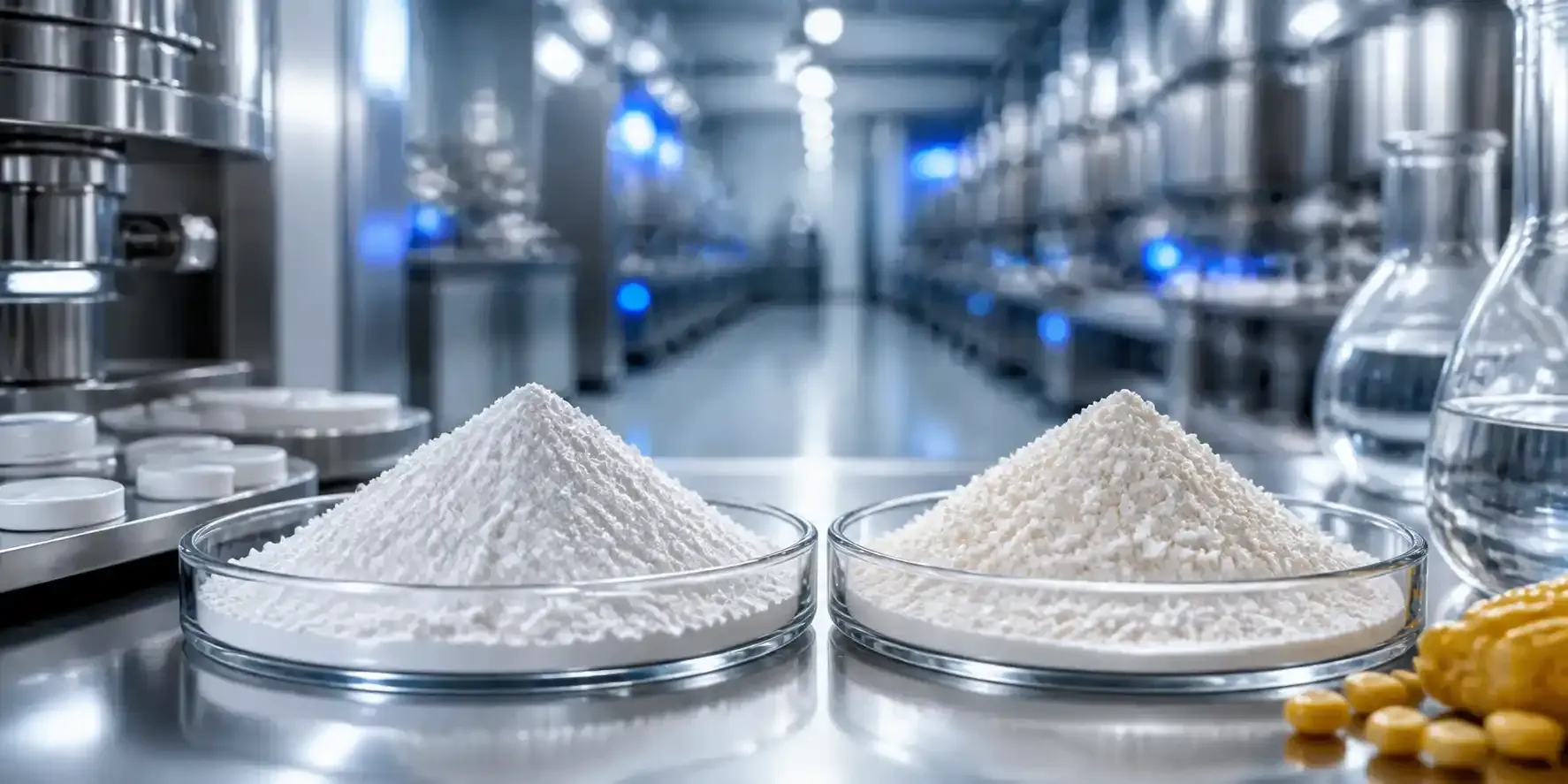
Microcrystalline cellulose and resistant dextrin, though often quoted like commodities, frequently lead to sourcing failures due to non-price details. Think spec alignment, test methods, documentation gaps, and packaging choices that subtly inflate landed costs.
This guide is for procurement teams aiming to build a safer, more repeatable way to qualify a microcrystalline cellulose supplier China shortlist and a resistant dextrin supplier capable of supporting scale. It focuses on factors that genuinely impact total cost: the crucial COA lines to secure, a sample-to-pilot workflow that prevents costly rework, and the documentation package that ensures predictable audits.
Why Landed Cost Outperforms “Best FOB” in Modern Sourcing
Several market indicators for 2026 highlight a clear trend: increasing demand, stricter regulation, and less room for informal purchasing. Excipients and nutraceutical fibers are experiencing rapid growth, particularly in Asia Pacific. This growth often magnifies procurement risks, with new suppliers entering the market, lead times shortening, and buyers facing pressure to approve materials faster than their qualification systems were designed to handle.
Practically speaking, the landed cost for microcrystalline cellulose (often abbreviated as MCC) and resistant dextrin is driven by five recurring cost factors:
- Spec Mismatch Costs: This includes issues like failed tablet hardness, poor flow, haze in beverages, or sensory problems.
- Documentation Costs: Delays during customer or regulatory audits can add significant expenses.
- Logistics and Packaging Costs: Damage, moisture absorption, relabeling, or repacking can incur hidden charges.
- Testing and Retesting Costs: Expenses from third-party labs, repeated sampling, and hold times add up.
- Supplier Responsiveness Costs: Slow Corrective and Preventive Action (CAPA) cycles or unclear change control processes can be costly.
A truly recommended Chinese microcrystalline cellulose supplier is rarely the one with the lowest initial quote. Instead, it’s the supplier whose paperwork and consistent performance effectively reduce these five cost categories.
Why China, and Specifically Shandong, Remains a Key Sourcing Hub
China continues to be a primary origin for plant-derived excipients and functional fibers. This is due to its combination of manufacturing scale and growing export expertise. Within China, Shandong often appears on buyer evaluations for both microcrystalline cellulose and resistant dextrin. This is attributed to its established industrial clusters and robust logistics infrastructure.
For buyers, the critical aspect isn’t just geography. It's whether the supplier can guarantee a stable, well-documented supply program. As an illustration of a Shandong-based producer, Shine Health (Shandong Shenghuai Health Co., Ltd.) provides product pages and technical details that align with the evidence procurement teams typically request during pre-qualification.
Microcrystalline Cellulose Buying Checklist for Tablet and Audit Success
Microcrystalline cellulose is highly valued across pharmaceuticals, nutraceuticals, food, and cosmetics for its contributions to binding, compressibility, and flow. A common procurement error is treating MCC as a generic powder. In reality, MCC purchasing is always a grade- and spec-specific decision.
Essential MCC Specifications That Impact Total Cost
Use the following checklist to standardize your Requests for Quotation (RFQs), compare offers, and minimize surprises after you buy microcrystalline cellulose bulk.
| MCC Checkpoint | What to Confirm in Writing | Why It Changes Landed Cost |
|---|---|---|
| Pharmacopeial Alignment | BP / USP / FCC / JP statement (as applicable to your market) | Prevents late-stage regulatory or customer audit issues |
| Purity Target | Commonly quoted as 0.99 for MCC in technical sheets | Reduces variability and incoming deviations |
| Particle Size / Mesh | Typical commercial range 60–200 mesh | Impacts flow, content uniformity, and tablet robustness |
| Grade Availability | PH-101, PH-102, PH-103, PH-105, PH-112, PH-113, PH-200, PH-301, PH-302 | Helps avoid “forced substitution” during supply shortages |
| Test Method Transparency | Ask what's used for key attributes (many suppliers list HPLC for their QC framework) | Makes disputes resolvable with comparable methods |
| Packaging Format | Common export format: 20 kg woven bag; confirm inner liner and sealing | Moisture pickup and handling loss are hidden costs |
A buyer approving a pharmaceutical excipient MCC PH-101 program should also demand a stable grade definition and robust change control. If a supplier alters the pulp source, drying conditions, or milling settings, your tablets might react differently, even if the Certificate of Analysis (COA) initially “looks fine.”
Understanding MCC PH-101 and PH-102 Specs in Practice
Most procurement teams use PH-101 vs PH-102 as an initial filter, as these grades indicate particle size and flow behavior differences that become apparent during compression and feeding.
During qualification, here's what to consider:
- Request samples of both PH-101 and PH-102, then conduct the same blend and compression study.
- Compare flow consistency, tablet weight variation, and sensitivity to lubricants.
- Ensure your evaluation reflects your actual production environment: press speed, target hardness, and your typical lubricant system.
For a structured overview of how grades relate to application and quality control expectations, the industry note MCC Grades Formulation and QC Guide offers a valuable reference point for aligning internal specifications with supplier grade naming.
Where to Quickly Validate Bulk MCC Options
When benchmarking suppliers, it's helpful to assess how clearly they present their MCC technical files. Suppliers who list grade coverage, mesh, purity, and standards directly on product pages generally streamline the Request for Quotation (RFQ) process.
Relevant product pages demonstrating typical export-ready MCC presentation include:
While these links don’t replace your own audit, they illustrate what “procurement-ready” disclosure often entails.
Resistant Dextrin Procurement for Clean-Label Fiber Initiatives
Resistant dextrin is widely used as a dietary fiber because it resists digestion in the small intestine and acts as a prebiotic fiber in various food and supplement applications. From a sourcing perspective, resistant dextrin isn't just about fiber content; it’s also about raw material origin, sensory neutrality, and consistency.
What “≥82% Fiber” Means for Buyers
A common procurement benchmark for resistant dextrin is a guaranteed dietary fiber content. Technical sheets often specify fiber content ≥82% as a baseline target.
Key buyer questions that help prevent downstream costs:
- Is the fiber content ≥82% guaranteed on the COA for every single lot?
- What is the appearance specification (often white to light yellow) and how strictly is it controlled?
- What is the protein limit (frequently listed as ≤6.0% in product parameter tables)?
- Is the starch origin clearly stated (e.g., corn starch), and is non-GMO status properly documented when required?
When resistant dextrin is incorporated into low-sugar beverages or powders, even minor variability can lead to expensive rework. This might manifest as differences in haze/clarity, shifts in sweetness perception, or unexpected processing behavior. Your qualification plan should definitely include a finished-product trial, not just a bench test.
Non-GMO vs. Organic Resistant Dextrin: A Supply Chain Consideration
Many teams might view “Non-GMO” and “Organic” as marketing terms. However, in procurement, they represent distinct documentary burdens and necessitate different audit approaches.
- Non-GMO resistant dextrin programs often rely on robust traceability and independent third-party verification.
- Organic resistant dextrin powder programs typically involve additional certification scope and more stringent segregation requirements throughout the supply chain.
When building a supplier comparison sheet, it helps to carefully review how suppliers define their resistant dextrin variants and their raw material sourcing practices.
Examples of product pages that provide common buyer-requested disclosures include:
(Procurement note: “resistant maltodextrin” is sometimes used interchangeably in market discussions; your internal specifications should precisely define what you are approving.)
The Documentation Package That Defines a Recommended Supplier
A “recommended Chinese resistant dextrin manufacturer” or a “recommended Chinese microcrystalline cellulose manufacturer” typically earns that status by successfully passing a document-first pre-screen.
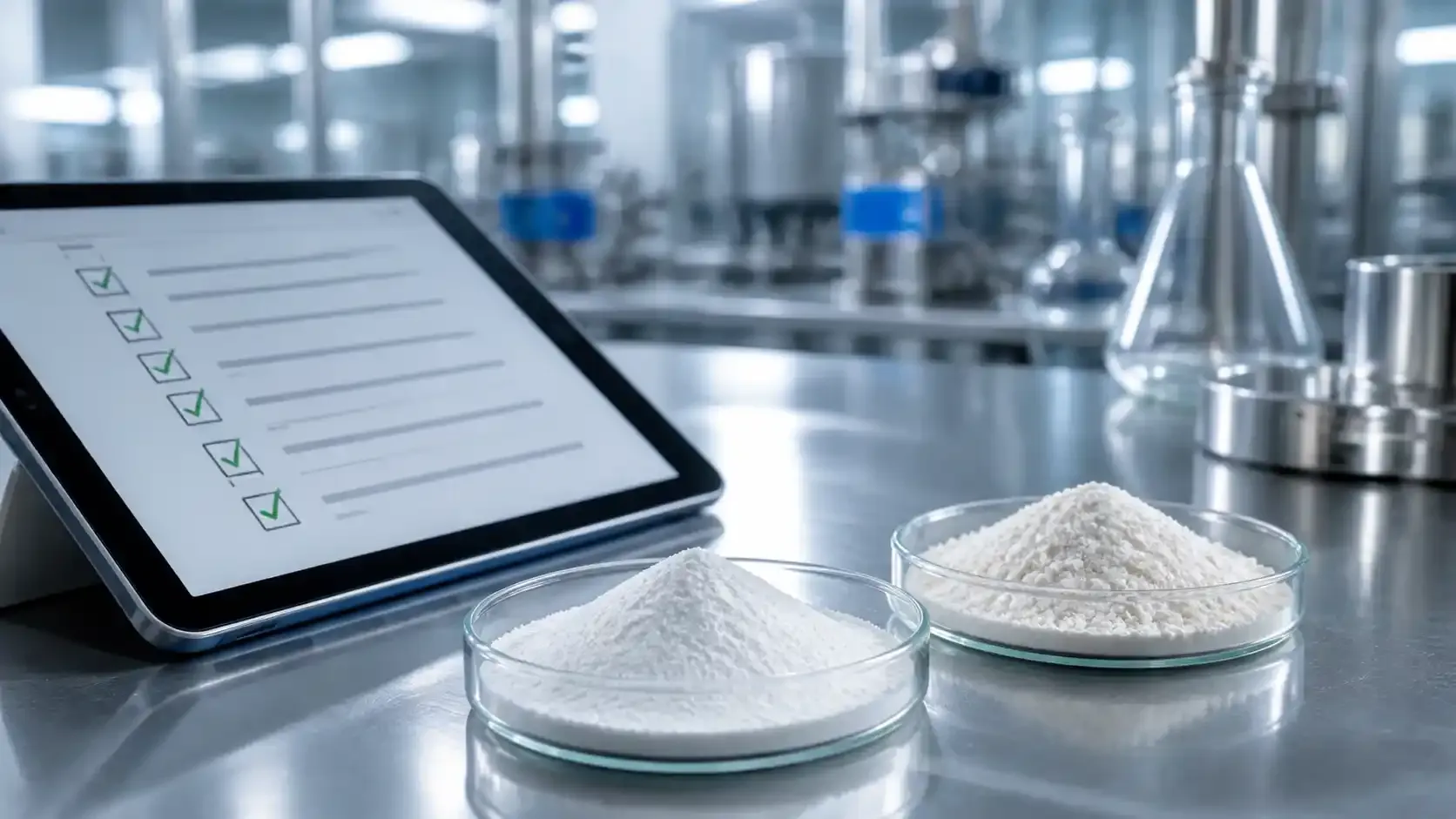
Use this checklist to standardize the minimum required evidence:
- COA per batch: Must include clear test items, limits, and results.
- Specification sheet: Should feature revision control.
- Allergen statement: Along with other relevant food safety declarations.
- GMO statement: And third-party verification, if required.
- Halal / Kosher certificates: Essential if your target markets demand them.
- ISO9001 and food safety system certificates: Commonly FSSC 22000 in food ingredient supply chains.
- Change control commitment: For any changes to raw materials, processes, manufacturing sites, or packaging.
For MCC used as a pharmaceutical excipient, buyers frequently impose a stricter requirement: documented alignment to relevant pharmacopeias and a stable Quality Control (QC) framework.
A Five-Step Sourcing Workflow to Minimize Rework and Expedited Shipments
Even robust specifications can fall short if the underlying workflow is weak. A repeatable workflow significantly lowers the chance of “false approvals” that later necessitate reformulation or emergency freight.
- Desktop Pre-Screen:
Compare microcrystalline cellulose grades, mesh ranges, and stated standards.
Confirm resistant dextrin fiber content (e.g., ≥82%) and documentation for raw material origin. - Samples and Incoming Tests:
Test MCC flow and compressibility within your typical formulation.
Evaluate resistant dextrin solubility and sensory impact in its intended final format. - Pilot Run:
For tablets: verify weight control, hardness, friability, and disintegration behavior.
For beverages/powders: confirm clarity, taste neutrality, and process stability. - Audit (On-site or Remote):
Focus on batch consistency, hygiene controls, and how deviations are managed.
Ensure the supplier can explain COA results with traceable records. - Commercial Terms That Protect Landed Cost:
Finalize packaging details (e.g., 20 kg bag format and liner specifications for MCC).
Confirm lead times, loading plans, and documentation turnaround times.
This workflow is also where a “recommended supplier” status truly becomes quantifiable: the best suppliers efficiently shorten the cycle time from question to evidence to decision.
Building a Future-Proof Supplier List: A Concluding Thought
Microcrystalline cellulose and resistant dextrin are fundamental, plant-derived ingredients, but procuring them is no longer a “simple buy.” Buyers who prioritize the selection of microcrystalline cellulose grades PH-102 PH-112, pharmacopeial alignment, and robust resistant dextrin fiber guarantees as core procurement principles typically experience fewer deviations, less need for reformulations, and more predictable landed costs.
To explore how qualified Shandong manufacturers present export-ready specifications and documentation, a practical starting point is to review detailed product pages and grade coverage from suppliers like Shine Health. You can learn more about their offerings at www.sdshinehealth.com.